Showing posts with label gourami. Show all posts

Tuesday, April 30, 2013

Summer Tubbin'

It's getting warmer around the US and Europe which means pond season for the lucky few of us, but it's also something special for the serious hobbyist: a chance to expand your fishroom. I'm not talking about an extension on the house; I'm talking about your back porch. In most of the US and Europe, there are at least a couple of months of weather warm enough to house most of our aquarium fish outside.

Hobbyists take advantage of this warm summer weather to spawn and grow fish outside. Some accidentally discover that fish spawn like this while others, often going on the words of those with the happy accident, purposefully put fish outside to spawn. Most people believe the trick to getting the fish to spawn is how closely this replicates their natural environment. The floating plants, the live food, the cooling rain are all things the fish would naturally experience and have evolved to live with. People have had success spawning all kinds of fish from livebearers to egg-scatteres like barbs and tetra. Gourami are another favorite fish to spawn in these tubs.

Tubs used for breeding by renowned hobbyist Rachel O'Leary (msjinxkd.com)

Placement of the tub does matter. You can't put them in full sun all day long as this will heat up the water too much. Ideally you want about 4-5 hours of morning sun. This means  placing them on the eastern side of your house or yard. The tub (or tubs) should not be under cover or eaves of your house because the rain is important to them. Rain cools the water in the heat of summer and provides mother nature's water changes.

Most any tub that holds more than 20 gallons of water will due. Animal watering troughs are a favorite because they are large, built to hold water, and the plastic won't degrade under the UV rays of the sun. You might have to modify the tub a bit. If you don't like the idea of tubs overflowing when you get a lot of rain in a short time, then think about drilling overflow holes. These drain the tub when it reaches a certain water level and prevent the tub from overflowing and sending your plants and fish overboard.

Water trough made into a pond (azcopperpenny @ Photobucket)

An optional piece of equipment is a pump.  Some people like the calming noise of water moving, and some people just like to have some water movement in the tub to keep it a uniform temperature. Something like this would be less important if you were raising gourami or betta spawns.

When setting up these summer tub ponds, you are really at the mercy of mother nature. This often means being familiar with the weather patterns in your area: what time of year it really begins to warm; what time of year you see cooling off; just how much rain you get in the summer. When you see daytime temperatures steadily in the 70's (~ 21C) is when you should begin setup. Just as with a tank, start with the plants first. Fill the tub with a mixture of dechlorinated tap water and water from the tank that you will be bringing the fish. This gives the plants some nutrients to consume before you add the fish. Let the plants get settled for about a week. Then you add the fish. Don't just dump them in; acclimate them like you would any fish. You may also want to place some mesh netting over your tub pond because fish have a tendency to jump in the first few days.

Frogs in the pond are cute, but can eat fry (tomylees @Flickr)
Plants are a big aspect of these summer tub ponds. They are part filtration system, part cooling system, and part fry nursery. The best kind to have are floating plants like water lettuce, frogbit, water hyacinth, and duckweed. These all have roots that hang down and allow fry a good place to hide. Egg-scatterers can attach their eggs to these roots; bubble nesters can attach their nests to the undersides of leaves. If you are looking for some lovely blossoms, lotus plants do well in these setups, too. Marginal plants like iris, cattails, and rushes can be used to add some aesthetic appeal and make the tub really look like a pond. Just like with fish tanks, patience is key!

This summer, I've decided to try out these summer tubs. I have a lot of floating pond plants because they grow so well in the pond, and I have an old plastic tub that I used to haul around pond plants in. The only thing I would need is the fish. As much as I'd love to try breeding my gourami in a tub this summer, I don't want something to go wrong on my first try and accidentally kill them. So I'm going to use the livebearers from my pond, mosquitofish Gambusia holbrooki. When the summer is up I will just put the remaining mosquitofish back into my pond. Next summer I will be spawning my gourami. Wish me luck!!

My tub pond! Grow, baby, grow!!!

Works Referenced


Colleti, Tim, Dr. 2011. "Summer Tubbin': Breeding you Fish Outdoors."  Tropical Fish Hobbyist (June) 86 - 89.

Sipes, John. 2003. "Summer Tubbin'." www.aquarticles.com. Retrieved: 28 April 2013.

Marchio, Liz. 2008. "Urban Pond Tubbin' Water Gardens". AquaScaping World  (June): 8 - 11. 
Saturday, March 23, 2013

My Favorite (Aquarium) Fish

As soon as people here I keep aquariums they ask me what my favorite fish are. It's so hard to just pick one, so I've come up with a list of my top ten favorite aquarium fish! Let's count them down!

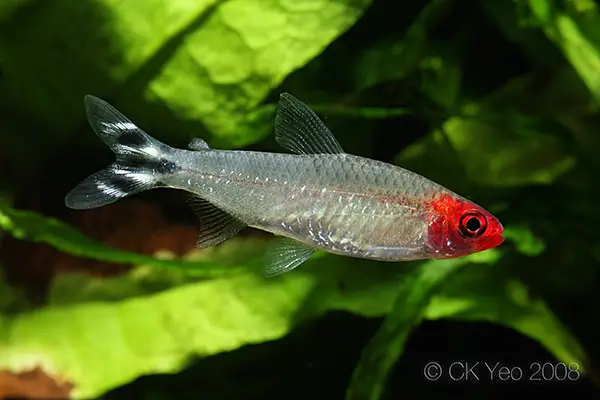
10. Rummynose Tetra (Hemigrammus bleheri)

Rummynose tetra individual (SeriouslyFish.com)

These little beauties are some of the most tightly shoaling tetras in the freshwater world. Sure other tetra will shoal from time to time, but these guys do it almost nonstop. They aren't the most colorful of the tetra, but that lovely red nose sure can shine! Like most of the fish on my list, they are softwater fish. These little beauties can withstand the high temperatures that discus need and are often recommended with them. 

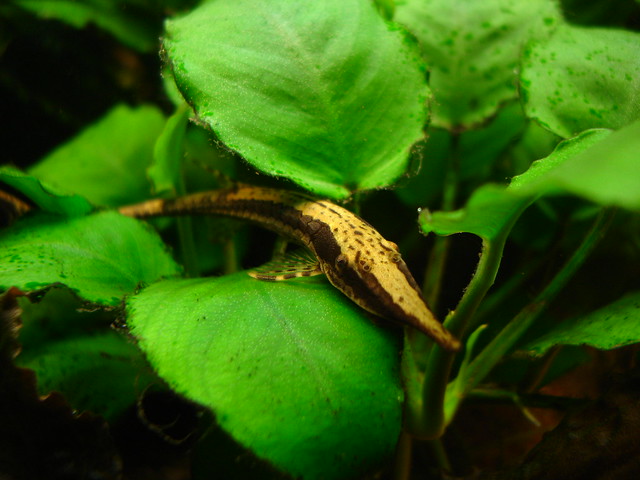
9. Twig Catfish (Farlowella spp)

Farlowella spp clinging to Anubias (sampukko @ Flickr)

This fish lives up to its name. In poorer quality video and pictures it can easily be mistaken for a twig. Its appearance is its camouflage and helps it remain undetected in the wild (and in the aquarium sometimes!). Even though I don't see him every day, I still love my farlowella. They are closely related to plecos but have an almost entirely vegetarian diet. They get quite long (7 inches [17 cm]) but lack the girth to go with it. They get along very well with small fish and shrimps. I've even seen my shrimps climb on him like he was a real twig!  

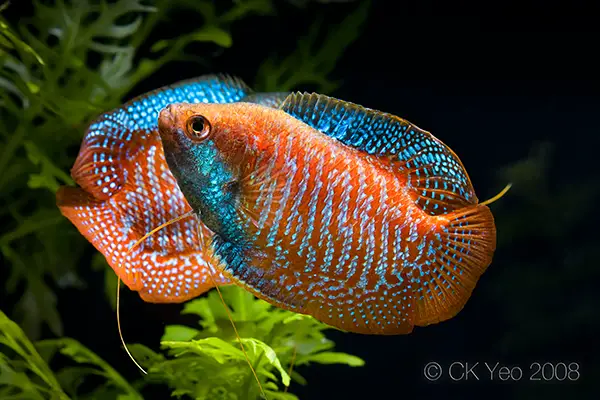
8. Gourami (Trichogaster spp)

Male dwarf gourami in territorial display (SeriouslyFish.com)

An air-breather just like bettas, these little fish can make excellent centerpieces for a small tank. They do fine alone or in groups, but it's best to have multiple females per male in a group. They can be a bit territorial towards other gourami and fish that resemble gourami like bettas and cichlids, so if you are keeping multiple gourami in a tank you need to have a lot of hiding spaces for them. Gourami love areas of thick planting as well as floating plants. While I know my male gourami would do fine on his own, I just love watching his colors shine as he displays for his females.

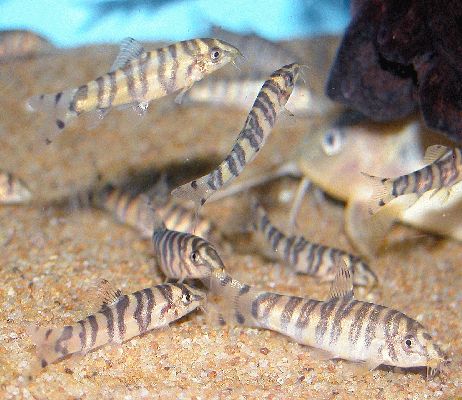
7. Botine loaches (Botia spp)

Juvenile ladder loaches Botia rostrata playing (Emma Turner @ Loaches Online)

I fell in love with these guys years ago but have not been able to get them in a tank of mine yet. I saw them playing in a petstore and fell in love. If I were a more capricious person I would have bought them then and there, but I went home and did research.  For the most part, the botine loaches need tanks 55 gallons (208 L) or larger. They get larger than you would expect (3+ inches [8 cm] depending on species) and need to be in groups of 6 or more. On top of that, they are very active. But what made me fall in love with these little buggers was the way they interact with each other. They really look like they are playing. They also like to pose in strange positions around the tank which includes laying on their sides or at otherwise odd angles just because they feel like it. For little fishes, they have lots of personality, and I can't wait to get some of these in a tank of mine one day.

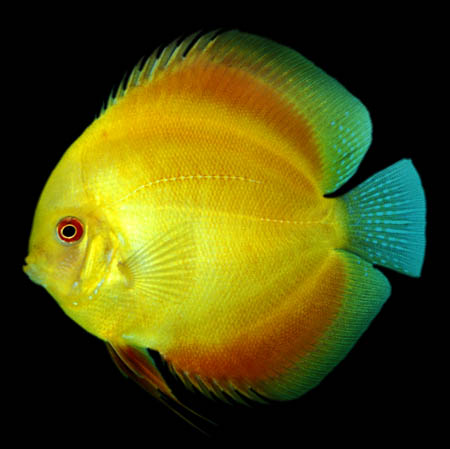
6. Discus (Symphysodon spp)

Captive bred discus Symphysodon aequifasciata (SeriouslyFish.com)

They are called the kings of the aquarium and for good reason. Growing to approximately the size of a CD and coming in rainbow of colors, discus make an impressive sight in an aquarium.Their unusual shape and myriad of colors are what first grabbed my attention, but I was hooked when I saw them swimming in an aquarium. They are so graceful! But with that grace and beauty comes a great amount of care. This coupled with their cost doesn't make them a fish for beginner or even most intermediates. It also makes them difficult to pair with other fish; it's not that they are aggressive, but it's that they need very warm, soft, and acidic water.

5. Cardinal Tetra (Paracheirodon axelrodi)

Cardinal tetra shoal (Leino88 @ Flickr)

Another one of the few fish that can withstand the high temperatures discus need, they also rival discus in coloration. Those blue streaks stand out across a room and make them the most beautiful tetra in my opinion. Up close the deep red streak that runs their full body length becomes apparent. Their relaxed and calm nature makes them a great pair with other beautiful fish like gourami and discus. Whether they are in a loosely shoaling group of 12 or in a tight shoal of 50 these tetra stand out in a tank and in my heart. If I could have any tetra in a tank, it would be these guys.

4. Fighting Fish (Betta splendens)

One of my personal bettas, Lumi the halfmoon plakat

A lot of people call these little fish with a big attitude, and I'm more than inclined to agree. Every single betta I've owned has been very personable. Those long flowing fins entice many people in, but I am more fond of the rainbow of colors they come in. Another one of my favorite things about bettas is their adaptability to smaller tanks and different water parameters. Bettas were the only fish that I could have in my 5 gal tanks while I was in college. They will also do well in hard or soft water, so you can keep them no matter what your tap water is. 

3. Kuhli loaches (Pangio spp)

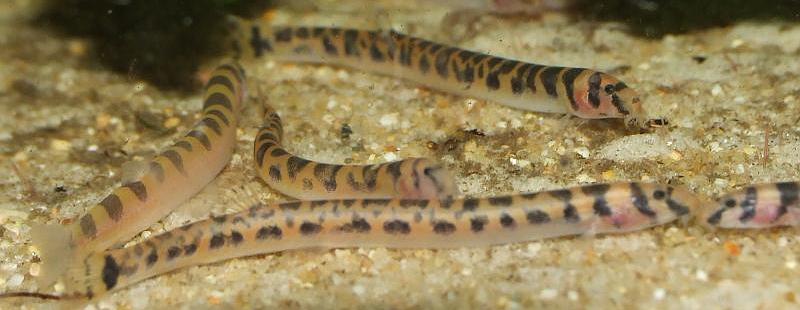
A group of Pangio shelfordii (SeriouslyFish.com)

Along with the twig catfish, these little guys are some of the strangest looking fish on my list because they don't look like fish! They look like little worms! This is especially true of the brown species. Kuhli loaches have squirmed their way into my heart. Just like the botine loaches they are full of energy and spunk. They like to drape themselves in odd positions around the tank and use those adorable whiskers to sniff out food. They love the company of other loaches and it's not uncommon to see three or four squished together in the same hidey-hole. Many people have trouble with these guy hiding a lot, but I never have. I think it's because I give them enough hiding spaces that they feel comfortable to come out all the time. 

2. Goldfish (Carassius auratus auratus)

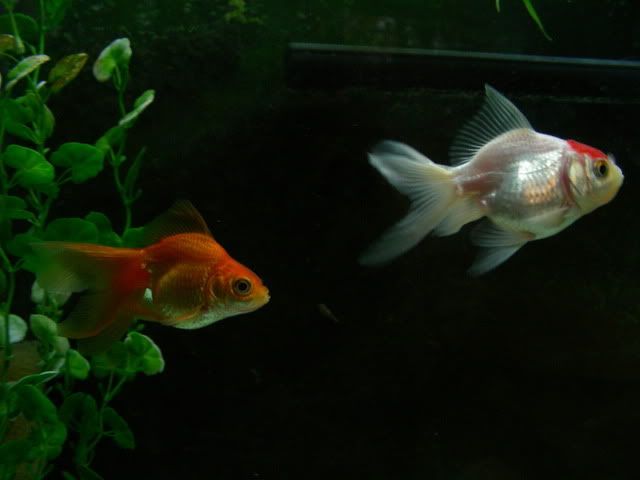
My two current fancy goldfish, Magikarp and Burbbles

Years ago when I was a young girl, these bubbly little fish stole my heart. My knowledge of their care and love of them have only increased through the years. Yes they need large tanks and lots of water changes, but it's worth it for those wiggly bodies and cute faces. I can't imagine my life without goldfish.

1. Koi (Cyprinus carpio)

Byakko, my shiro utsuri koi. Taken in 2011.

While not a true aquarium fish, they are a big part of the hobby and one of my favorite fish. But they didn't start out that way. I never really appreciated them until my little koi that I bought back in 2007 grew into 18 inch (45 cm) beauties. I spend hours in the summer just watching them swim around the pond. In the store, they do just look like large goldfish, but when they are grown there is nothing that rivals their beauty and grace. 

I am lucky enough to own a good number of these including goldfish, bettas, koi, kuhli loaches, and twig catfish. One day I will have all of these fish, but some like the botine loaches and discus are potentially a decade away. It's good to have dreams.

Friday, February 15, 2013

My Tanks: 15 Feb Update

Wow. It's been a long time since an update, and I have a lot to tell. There will be a lot of pictures.

Community Tank

The biggest changes have been in the 29 gal community. It is almost completely stocked. In the beginning of January I ordered my Farlowella acus from Invertibrates by Msjinkzd. Since I knew it might still be a while before there was some color and movement in the tank I also ordered a handful of red cherry shrimp (Neocaridina heteropoda var. red) to add some movement and color. Everyone arrived safe and in great health; I highly recommend buying from this seller! I know I will be a repeat customer. Just take a look at what she sent me! 

Farlowella acus on his first week in the tank. He's cleaned up that algae now.

From the side. The seller did an excellent job of making sure he was eating
before selling him. Comes off his wood when the algae wafers go down.

One of my female RCS just a few days after introduction. She is now berried.

The crypts that I added back in December have really taken off. Both plants have very little melting, and I see lots of new leaves. The tiger lily did not make it. It showed good growth for a few weeks and then the leaves just withered away and never came back. I noticed a problem with the flow behind the smaller piece of driftwood, and had to move the wood and the dwarf sag and pygmy chain sword that was behind it. The sword never recovered and my other sword that was in the tank died off, too. The dwarf sag is slowly recovering, but I don't think it will ever do well there. So I'm looking to put some more crypts on the right side later this year.

In the beginning of February I ordered kuhli loaches (Pangio oblonga) and a trio of honey gourami (Trichogaster chuna) from The Wet Spot in Oregon. Everyone came through quarantine without a hitch so they were put in the main tank a week after they arrived. In fact, they actually spawned twice in the QT to give you an indication of the health of the fish when they arrived. The Wet Spot is another seller I highly recommend.

Full tank shot. You can see the male just to the left of the wood.

One of the females defending her position.

My male gourami trying to romance one of the females.

I believe this is one of the new loaches. It's rare that I get
a picture of them at all, so a butt shot will have to do!

Other tanks

Not too much has changed in my betta and goldfish tanks. I removed the fake floating plants in the goldfish tank since the live plants have grown large enough to fight the current from the filters. It took the goldfish a little bit to get used to, but they're adjusted now.

In the betta tanks I've replaced the home-made sponge filters with Hydro II sponge filters. I noticed some algae issues a few months back and decided I needed a bit more flow. The Hydro II's have give that to me but still keep the flow low enough for the bettas. It's a win-win!

And I did a bit of decorating both tanks for Valentine's Day!

Goldfish tank! Pardon the algae on the back wall.

Hearts on the betta tank! They flared at them for a few minutes.

My last bit of news is a plan to set up a new tank! The plants in my second betta tank just never did well. So I'm breaking down that setup, finding new homes for the bettas and setting up a dedicated red cherry shrimp tank! Those little shrimps were just supposed to be a placeholder until I could get some movement in the tank, but I've fallen in love with them. I have seen the female RCS holding eggs in the community, but I've never seen the babies. I'm pretty sure the fish are eating them. So instead of fighting nature I'm going to dedicate a tank to my shrimps!

Thursday, February 7, 2013

That Kiss!

Not all is well in paradise.. 

A Valentine's Day draws near I’m seeing more pictures and .gifs of the trademark behavior of the kissing gourami. I’ve also heard a few people planning to purchase these fish as gifts for loved ones. Neither of these actions are as sweet as you might think. I’ll explain why.

The kissing gourami is a unique gourami in that it is the only species in its family Helostomatidae. They lack the long ventral fins of other common gourami but still maintain that gourami attitude. They are feisty and will put on displays to keep others from their territory, but they display by lip-locking. This appears to people as if the fish are kissing, but they are actually fighting to drive the other fish off; they push against each other until one fish backs down and swims away.

Kissing gourami in a territorial dispute (Tom Bailey Photography)

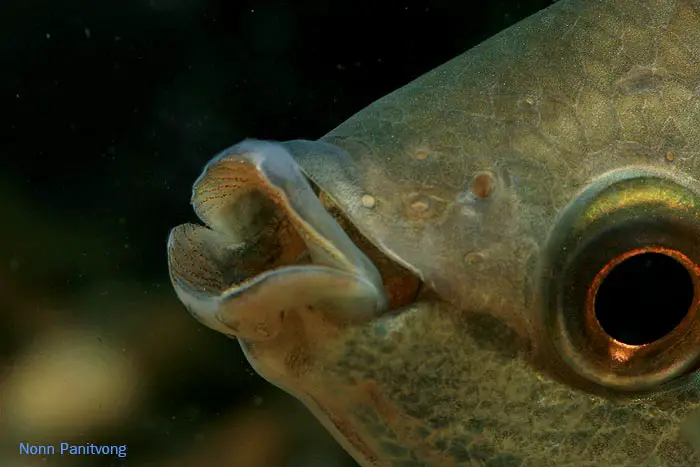
The thick lips of the kissing gourami were originally developed for rasping algae and other microorganisms from branches and leaves in their ancestral swamps. In the aquarium they will do this to plants as well as the walls. This is why you will often see them “kissing” everything in the tank. Because they have such powerful jaws, they will often tear up the leaves of plants in attempt to eat what grows on the surface.  As they grow, they will consume smaller fish that they are housed with like small tetra, danio, and rasbora.

Mouth detail of wild form (Seriously Fish)

This fish also gets much larger than most of the common gourami. What you see in the small store tank are just the juveniles. Most specimens top out between 10 inches (25 cm) and 12 inches (30 cm) long. Tropical Fish Hobbyist magazine recommends a 75 gal (283 L) as the minimum size for a single adult; groups need much larger tanks. When they are fully grown, those two little babies that used to ‘kiss’ each other will be large and territorial. It’s not uncommon for the larger fish to harass the smaller one to death. This is not to say they can’t be kept together, but two fish almost a foot long each require a lot of space to ensure each fish has its own territory.

Now you may be thinking that I just ruined your Valentine’s idea for the fish-lover in your life. But fear not, for he or she would have been very unhappy if you put two of these fish in her or his tank without asking first. There are much better ideas, and I don’t mean a red betta in a vase. I’ve seen some small heart-shaped aquarium decorations that would be darling to surprise your fish-lover with. Nothing like waking up and finding a heart in you aquarium to know someone loves you. Gift cards are another great option especially if you know that special someone is looking for a specific item. And there is always jewelry. I’ve seen some very beautiful fish necklaces and earrings.

Silver red crystal fish pendant
(maxjewelrystore.com)

So this weekend when you are out shopping for that special someone in your life, leave the kissing gourami in the store. Your fish tank (and your significant other) will thank you for it. Most tanks can't house a surprise belligerent 10 inch (25 cm) fish that eats your aquascape and tetra. 

Works Referenced

"Helostoma temminkii, Kissing gourami." fishbase.org. Updated: 3 July 2012 Retrieved: 7 Feb 2013.  

"Helostoma temminkii (Kissing gourami)." Seriously Fish. Updated: 2013  Retrieved: 7 Feb 2013. 

"Kissing Gourami Fish." Fishchannel.com. Updated: 2013 Retrieved: 7 Feb 2013

Saturday, February 2, 2013

Is my fish a girl or a boy?

How to determine the sex of your fish

Most people like to name their fish and want to have a name that fits the fish’s gender. Other people want to try breeding and need to know if they have males and females. Sexing fish can be a tricky thing, but there are some species and families of fish that are relatively easy. Before we get into those, I’ll talk about some general trends in sexing fish.

Females are rounder

Of course this only works with mature animals, but for the most part the female will have slightly thicker bodies. This is because the eggs that females carry take up more space than sperm. The females also need larger fat reserves to produce the eggs.

Males are smaller and more colorful

Just as in birds, males are the more colorful of the genders. Males compete with other males by showing off their vibrant colors. The most colorful male gets to mate. They are also slightly smaller than the females.

Sexing popular fish

Goldfish (Carassius auratus auratus)

These fish can actually be a little tricky as they have no obvious differences when the fish are not breeding, but there are two things you can look for when they breed: breeding stars and the shape of the vent.

Breeding stars or breeding tubercules will only appear on the males. They appear on the gill plate and pectoral fins. These are a sign of virility, and a study performed on a relative of the goldfish found a correlation between the number of breeding stars and how healthy a male fish is. These stars help a female fish decide who she wants to mate with.

Breeding stars on pectoral fin and gill cover (goldy fk @ flickr)

The next thing to look for is the shape of the vent (this is also called the cloaca and is the opening near the anal fin). The vent of the male will be slightly larger and concave (meaning it curves inward). The vent of the female will be smaller and protrude slightly. The pictures below better illustrate this.

Circled male vent (mikroll @ TheGAB)

Circled female vent (mikroll @ TheGAB.org)

I find using the vent method to be a little difficult as my goldfish usually like to have their heads facing towards me begging for food. I prefer to use the breeding star method because they are more visible in my experience.

Betta fish (Betta splendens)

These small, popular tropical fish are a little easier than goldfish to sex because some of it can be done out of the breeding season. There are two main ways to sex bettas: fin length and the presence of an ovipositor.

If you see a long-finned betta it is a male. There have been cases where females have longer than normal fins, but they aren’t nearly as long as the typical halfmoon spread seen below.

These extremely long fins indicate a male(Aquariumloto @ Flickr)

Sexing bettas gets a little trickier when you are dealing with plakat (or short-finned) bettas because the male and female fins are the same length. Now you have to look for the ovipositor on the female. The ovipositor is a small white tube protruding from the vent of the female; in breeding she uses this to position eggs. It will appear as a small white dot behind the ventral fins. The lack of such indicates a male.

Arrow points to ovipositor (Stuart Halliday)

Angelfish (Pterophyllum spp)

Another extremely popular aquarium fish, but much harder than bettas or goldfish to sex. They have no discernible differences when they are not spawning, and when they are spawning you have to look very closely to see the only difference:  the males will have a thinner breeding tube which is visible in the vent of the fish. Both males and females have breeding tubes, so the key is to look for the smaller one.

Female angelfish breeding tube (koiangelfish.com)

Male angelfish breeding tube (koiangelfish.com)

Neon tetra (Paracheirodon innesi)

Like angelfish, neon tetra are difficult to sex. The only difference will be in size. The females will be slightly larger and fatter especially when they are ready to breed. Males may show slightly better color, but these differences are so minute that they will likely go unnoticed.

Livebearers (Poecilidae)

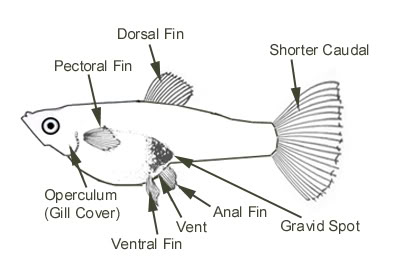
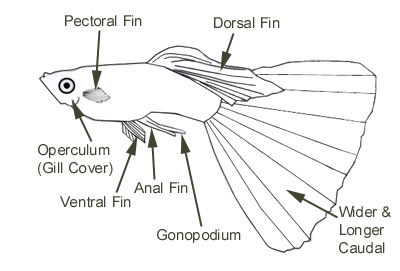
These are fish like guppies, platies, swordtails, and mollies. The males and females are very easy to tell apart. There is a large size difference with some females being almost one and a half times the size of the males. The males will have long, flowing fins and are very colorful. Males also possess a modified anal fin called a gonopodium; this is used to transfer sperm to the females. Below you can see two illustrations showing the differences between male and female guppies

General female livebearer characteristics (jabraguppyroom.blogspot.com)

General male livebearer characteristics (jabraguppyroom.blogspot.com)

Cory catfish (Corydoras spp)

Another popular but difficult fish to sex, cories have no highly visible differences between the genders. Females will tend to be the larger ones and look much chubbier when they are breeding, but for the most part males and females look exactly alike.

Bristlenose pleco (Ancistrus spp)

These small plecos are surprisingly easy to sex. Both males and females will have the bristly nose, but the number and size of the bristles will be much greater in the males. This is especially true when the fish are in breeding condition. Scientists believe that males evolved the bristles to mimic young fish because females are more likely to mate with a male who is already caring for eggs.

Male bristlenose with month old offspring (goldy fk @ Flickr)

Oscar (Astronotus ocellatus)

Probably the most popular of the cichlids next to angelfish, but even more difficult to sex. Among wild populations the males show more color than females, but this isn’t reliable with the captive-bred fish that show up in stores nowadays because they have been bred for color.

Cherry barb (Puntius titteya)

This is a species that is easy to sex based on the general trends in fish genders. The males are smaller and have more red color and the females are larger and will be more brown in color. This holds true with wild-caught and naturally bred cherry barbs. There are some that have been specifically bred to make the red even brighter; these are much more difficult to gender. 

Female cherry barb on left, male on right (aquapage.cz)

Gourami

They aren’t as easy to sex as livebearers, but they are pretty easy if you know what to look for. If it’s not a captive-bred variant, the males will be a brighter color especially when breeding. If they are a color variant you have to look for a few other things. For the Trichogaster gourami (this is dwarf, honey, thicklips, and banded) look at the end of the dorsal fin; males will have a pointed dorsal, and females will have a rounded dorsal. These pictures below illustrate this as it can be hard to pick out if you’ve never seen it.

Male honey gourami (CK Yeo @ Flickr)

Female honey gourami (CK Yeo @ Flickr)

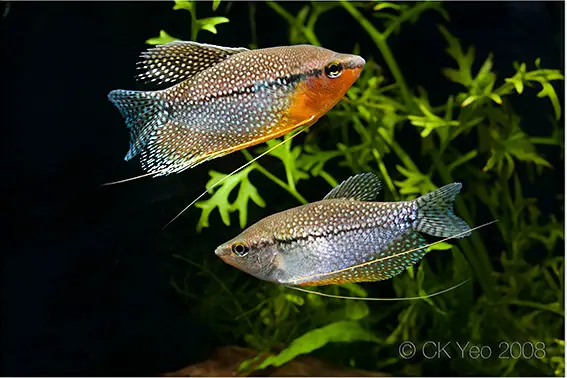
For the Trichopodus gourami (opaline, three-spot, blue, gold, pearl, and moonlight) you also look at the dorsal fin. The males will have a longer dorsal fin. Males of the pearl and moonlight species will show more red color than the females.

Pearl gourami. Male above, female below (seriouslyfish.com)

With some of our aquarium fish it can be very easy to tell the males from the females, but others can give you a lot of trouble. Some like oscars and angelfish can even give breeders trouble in determining gender. If you wish to breed any of these fish, I highly suggest you do a lot of research and read personal experiences. While breeding can be fun and rewarding, it can also be costly and heartbreaking when done incorrectly.

Works referenced

Christie F. 2006. Sexing Bettas: The Ovipositor. nippyfish.net. Retrieved: 31 Jan 2013

How to tell Male and Female Guppy Apart. Jabraguppyroom.blogspot.com. Updated: 29 July 2011. Retrieved: 1 Feb 2013.

Kortet R., J. Taskinen, A. Vainikka, and H. Ylonen. 2004. Breeding Tubercles, Papillomatosis and Dominance Behavior of Male Roach (Rutilus rutilus) During the Spawning Period. Ethology 110:591-601.

Seriously Fish

Sexing Angelfish. Koiangelfish.com. Updated: 2013. Retrieved: 1 Feb 2013. 

Sexing Goldfish. Bristol-aquarists.org.uk. Updated: 26 October 2012. Retrieved: 31 Jan 2013

Sexing Goldfish. theGAB.org. Updated: 16 Aug 2009. Retrieved: 31 Jan 2013

Thursday, December 13, 2012

My Tanks: 13 Dec Update

A lot has happened since my last tank update. Basically something has changed in every single tank. Most of the changes have been for the better. This will probably be my last tank update of the year as I'll have to wait until after Christmas to add any more fish because we will be leaving on vacation. I don't like to have fish in QT while I'm away.

I bought a new goldfish buddy for my remaining ryukin. She went through a 3 week QT just fine, and they are now swimming together in the large 55 gal. I've seen the breeding tubercules on the ryukin, but I don't see them on the new redcap oranda. And I've seen the ryukin nudging the oranda's vent. I've come to the conclusion that the new goldfish is a girl. I'd really rather have all males to avoid the breeding issue, but it's done and over with. Plus, my new oranda is just precious and outgoing as ever! How could I not love her?


My newest goldfish, a redcap oranda named Burbbles

Burbbles and Magikarp playing together. It's so hard to get them both in focus.

My 29 gal community has undergone the most changes. I added a new large piece of driftwood that I ordered from Aquariumplants.com as well as about 2 more species of plants. I've added green tiger lotus (Nymphaea lotus)  and Cryptocoryne undulata. I ordered them from PetsWarehouse.com, and I can't say I'm too pleased with the packaging. The plants weren't protected very well; there was no padding and the plants were just in plastic bags. The box was visibly crumbled, and some of the plants look damaged. It remains to be seen if they will recover.

Anyway, this complete the aquascape and hardscape. I'm going to let these plants establish for about a month before I begin stocking the fish. I still haven't decided on a final stocking plan, but I do know I will have a tetra species, a gourami species, and a twig catfish (Farlowella spp).

The crypts are small and hardly visible,
but the lotus is that large reddish leaf in the center.


Since I have written you, I've lost one of my bettas, Knucker. He was my oldest and had the worst health due to inbreeding.  During his last months I noticed he lost control of swim bladder and could not maintain neutral buoyancy, a problem common in double-tail bettas. While not a double-tail himself, I believe he carried the genes as I saw a lot of bad hallmarks of the double-tail like scoop head, a huge dorsal, and massive fins. I placed him in a breeder box in the 29 gal. I returned from a Thanksgiving vacation to find him dead, but I take heart in knowing that I gave him the best care and he probably wouldn't have gotten the same if another person had picked him up from the shelf.

Goodbye, Knucker. The picture on the left is from when I first bought him.

The last major change I made was for the plants. I've noticed rather stalled growth in many of my plants. I dose weekly with micronutrients using Seachem Comprehensive, but I still didn't get good growth. After a little research I figured out it is because my water is so soft. I started adding Seachem Equilibrium to raise the GH up to about 6 in each of my softwater tanks. I use it to raise the GH to around 10 in my goldfish tank as they are hardwater fishes. As of right now I haven't seen a large increase in plant health, but I didn't expect it so soon as I've only been using Equilibrium for two weeks now.