Showing posts with label betta fish. Show all posts

Sunday, October 25, 2015

Marimo (Aegagropila linnaei) Care

Basics 


Marimo, sometimes called moss balls or marimo balls, are a popular aquatic pet. While not an animal, many people keep them as pets due to their cute nature and easy care. Marimo aren’t a plant either. They are made of a type of cladophora algae that is rolled into balls by wave action (or by hands in captivity).  This algae is very slow growing and will not spread to the rest of your aquarium. They grow approximately 5 mm (0.2 in) per year, so there is not threat of it taking over your tank.

Marimo can live for a very long time. They grow continuously and at the same rate. The largest marimo is 95 cm (37 inches) in diameter. Given their growth rate, it is over 200 years old. Most marimo in home aquaria only reach 20–30 cm (8–12 inches). You can find them sold anywhere from 5 mm (0.2 in) up to 10 cm (4 in). The larger the ball, the more expensive it will be.

Giant marimo on display at Lake Akan (bugfox.net)

In the wild, marimo are only found in lakes in higher latitudes. Colonies are known to exist in lakes in Japan, Scotland, Iceland, and Estonia. Two lakes in which they occur—Lake Mývatn in Iceland and Lake Akan in Japan—are protected by law. The colonies in Lake Akan are known to grow the largest and most rotund marimo. They live between 2 and 2.5 m (6.5 and 8 feet) deep where gentle wave action turns them over, keeping their cute ball shape.

Marimo are not the only form of Aegagropila linnaei. It will grow on the shaded side of rocks in an epilithic form or free-floating filamentous form that can form a carpet on the muddy lake floor. When small filaments of the algae get rolled into balls, they take the marimo form. These balls do not have a hard center and are algae all the way through.

Minimum tank size

Marimo necklace (SewOeno @ Etsy)

As long as the marimo is covered in water, the tank size doesn’t matter. Nano marimo (5 mm or smaller) can actually be housed in containers small enough to hang around a necklace. As the marimo grows it will need a larger container. You don’t even have to keep them in traditional aquariums with filtration as long as you change the water periodically. Water movement is also not necessary.  Decorative vases can be used as well as mason jars or anything that holds water. They can be kept in closed jars as long as you open the top every once in a while to let some fresh air in.

Temperature Range


Coming from high latitudes, marimo prefer cooler temperatures. They can handle temperatures up to about 78F (25C). Above that their growth can be affected or they can fall apart. When the water temperature begins to get this high, consider moving your marimo’s home to a cooler part of the house and change the water more frequently. Even though they come from cool lakes, marimo cannot take freezing temperatures. Protect them from frost.

Water Quality


Unlike fish whose waste products (carbon dioxide and ammonia) are harmful to their health, marimo’s waste product (oxygen) isn’t harmful. But they do need periodic water changes to replenish the minerals in the water taken from photosynthesis. It is also recommended to change the water more often in the summer to help keep the marimo cool.

When you change the water, you should remove the marimo and give it a gentle rinse in cool water. This will wash away any particles that may have attached to it. Roll it gently in your hands to help it maintain that cute ball shape. 
Marimo are unfussy when it comes to water parameters. A pH between 6 and 8 will suit them just fine. They will grow and flourish in just about all levels of water hardness. Interestingly, they can also take brackish water (to learn more about brackish aquariums read this article). In Lake Akan in Japan the filamentous form grows abundantly where salty water from natural springs flows into the lake. Sometimes a pinch of salt will help marimo recover when they have brown spots.

Food


Marimo are algae, and algae operates much the same way as plants. They get their food from the sun. The only thing you need to give your marimo is light. A simple desk lamp will do. Indirect sunlight like that from a north eastern window (in the northern hemisphere) is good. Avoid long hours of direct sunlight as marimo can get too much light.

Substrate


Any type of substrate is fine for marimo. People keep them on everything from sand to bare-bottom tanks. However, some people have found sand can get tangled in the threads of algae. I had a similar experience with my marimo and sand, and now I use large gravel or bare-bottomed tanks.

Tank Mates


Given the right-sized aquarium almost any fish makes a great companion for a marimo. Fish that eat algae like plecos, mollies, and hillstream loaches will not make good companions because their grazing on the marimo will likely outpace the marimo’s growth. The few fish that require temperatures regularly over 80F like discus will also be a poor choice for a marimo.

Goldfish

These beautiful golden fishies are often seen with marimo but not always in proper homes. Despite what seems to be everywhere, goldfish do not belong in bowls. You can read more about why they don’t belong in bowls in my goldfish care article. Even when placed in a large enough aquarium, goldfish aren’t the best companions for marimo as goldfish are known plant-muchers. They love soft plants and algae. Marimo are usually at the top of their list. Most goldfish will tear apart marimo. There is the odd case where a goldfish doesn’t eat a marimo, but why take the risk?
My marimo wrapped in twine to regain their shape after they lived in the goldfish tank.

Betta fish

Sometimes known as Siamese fighting fish, these little beauties are another common marimo companion. Like goldfish, they are often put in bowls but are not happiest there. You can read about why in my betta care article. Betta are another iffy choice for marimo as their temperature ranges only overlap a bit. Some people claim it doesn’t matter for the marimo, but others think it does. It might depend on the marimo. Some can take the warmth and others can’t. If you do choose a betta to be your marimo companion, be sure to have a backup plan in case your marimo can’t take the heat.

Good fish choices

Now that I’ve established some not so great fish choices, I’m going to give you a few species of common fish that have a better potential to work with marimo as they like the same cooler water and won’t munch on marimo. All of these fish need an aquarium larger than 10 gallons, and some will need a larger tank. For groups of fish fish look into zebra danio, neon tetra, glowlight danio, guppies, and white cloud mountain minnows. These fish are shoaling species which means they need to be around 6 or more of the same species. For a more solitary companion an axolotl is a good choice. They are actually a salamander not a fish, but they like the same low-light, cool conditions that marimo thrive in. You should research the needs of any fish you decide to keep with your marimo.

Shrimp

While shrimp eat algae, marimo are not on their dinner menu. Red cherry shrimp and ghost shrimp are two of my favorite shrimp commonly available. As their name implies red cherry shrimp are more vibrant than ghost shrimp. But red cherry shrimp will breed and may overpopulate a small tank. Ghost shrimp are much less likely to breed. They also grow larger than red cherry shrimp. Both shrimp love to graze on the bits and pieces that get trapped on a marimo and make great marimo companions.  

Red cherry shrimp cleaning a marimo (RW Sinclair on Flickr)

Snails

Another good choice for marimo are snails. These invertebrates eat algae but again marimo are not on their menu. Small snails like pond snails, ramshorn snails, and Malaysian trumpet snails do well in small tanks with marimo. Large snails like apple snails, mystery snails, and rabbit snails will need an aquarium larger than 5 gallons as well as supplemental food. Unlike the small snails, large snails can’t survive on the bits and pieces of debris around the aquarium.

Interesting Facts


Ceremonial returning of marimo to Lake Akan
(lake-akan.com)
Marimo are of great cultural importance in Japan where they have been declared a national treasure. Their name comes from the Japanese language and means “bouncy water plant.” When they were declared a natural treasure in 1921, people came from all over to collect and sell them as souvenirs. As a result the population in Lake Akan declined. It was dealt a further blow when a hydroelectric power plant was built along the Akan River which flows from the lake. The level of the lake dropped and hundreds of marimo were left stranded and dying in the exposed shoreline.

The local people recognized the treasured marimo was in trouble and launched a massive effort to protect them. An appeal went out to the people of Japan to return their marimo to the lake, and they responded in droves. The locals were so overjoyed by the effort of the people of Japan that they held a festival to celebrate the generosity of the people. The three-day annual marimo festival continues to today in Hokkaido.  One of the popular items in and around Hokkaido is an anthropomorphic version of marimo called Marimokkori. San-X also created Marimoko, a smiling plushie marimo.

Around Lake Akan there is a famous legend about the origin of marimo. It says the daughter of a chief of a powerful tribe living on the banks of a lake fell in love with a commoner, but her parents objected to the relationship. To be together, the couple gave up all of their possessions, ran away together, became marimo, and lived happily ever after. For this reason, marimo symbolize love in Japan and are often given as gifts to loved ones. It is believed that if you take good care of a marimo, it will bring you happiness and good luck.

Works referenced


"Marimo and Lake Akan." Japan Atlas. Updated: 20 Febuary 2013. Accessed: 25 October 2015.

"Marimo Balls." Aquariadise. Updated: 13 May 2013. Accessed: 25 October 2015. 

"Marimo Care." Buy Marimo. Updated: 2014. Accessed: 25 October 2015.

"What is a Marimo." Marimo Sanctuary. Updated: 20 October 2015.  Accessed: 25 October 2015.

**Disclaimer** Since there is little to no scientific research about fishkeeping published, much of the hobby today is opinion, but they are opinions given by keepers and breeders who have been doing this longer than some of us have been alive. Temperature ranges and adult sizes are not opinion. They have been scientifically documented.
Saturday, March 23, 2013

My Favorite (Aquarium) Fish

As soon as people here I keep aquariums they ask me what my favorite fish are. It's so hard to just pick one, so I've come up with a list of my top ten favorite aquarium fish! Let's count them down!

10. Rummynose Tetra (Hemigrammus bleheri)

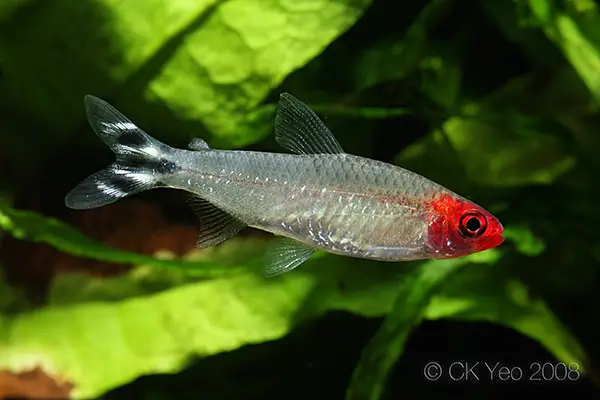
Rummynose tetra individual (SeriouslyFish.com)

These little beauties are some of the most tightly shoaling tetras in the freshwater world. Sure other tetra will shoal from time to time, but these guys do it almost nonstop. They aren't the most colorful of the tetra, but that lovely red nose sure can shine! Like most of the fish on my list, they are softwater fish. These little beauties can withstand the high temperatures that discus need and are often recommended with them. 

9. Twig Catfish (Farlowella spp)

Farlowella spp clinging to Anubias (sampukko @ Flickr)

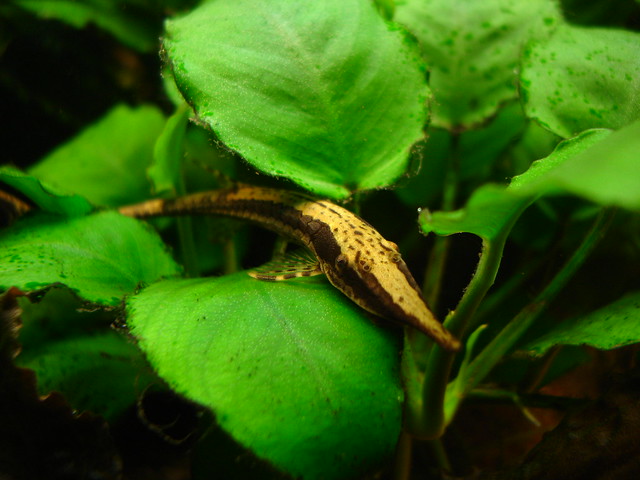
This fish lives up to its name. In poorer quality video and pictures it can easily be mistaken for a twig. Its appearance is its camouflage and helps it remain undetected in the wild (and in the aquarium sometimes!). Even though I don't see him every day, I still love my farlowella. They are closely related to plecos but have an almost entirely vegetarian diet. They get quite long (7 inches [17 cm]) but lack the girth to go with it. They get along very well with small fish and shrimps. I've even seen my shrimps climb on him like he was a real twig!  

8. Gourami (Trichogaster spp)

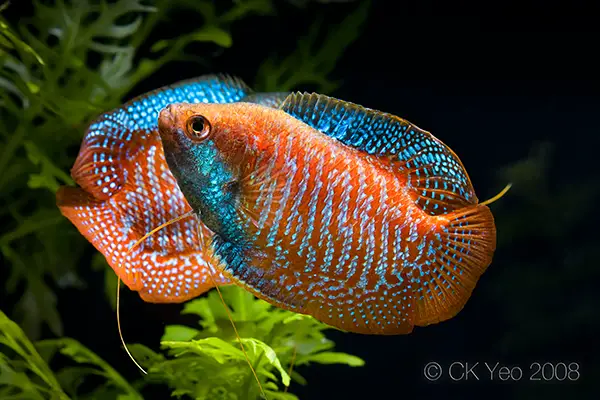
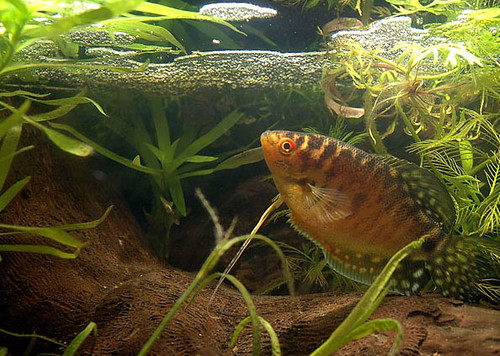
Male dwarf gourami in territorial display (SeriouslyFish.com)

An air-breather just like bettas, these little fish can make excellent centerpieces for a small tank. They do fine alone or in groups, but it's best to have multiple females per male in a group. They can be a bit territorial towards other gourami and fish that resemble gourami like bettas and cichlids, so if you are keeping multiple gourami in a tank you need to have a lot of hiding spaces for them. Gourami love areas of thick planting as well as floating plants. While I know my male gourami would do fine on his own, I just love watching his colors shine as he displays for his females.

7. Botine loaches (Botia spp)

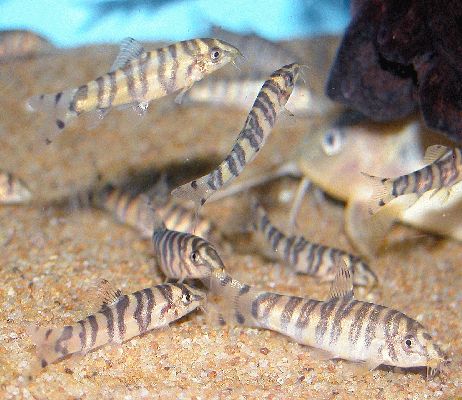
Juvenile ladder loaches Botia rostrata playing (Emma Turner @ Loaches Online)

I fell in love with these guys years ago but have not been able to get them in a tank of mine yet. I saw them playing in a petstore and fell in love. If I were a more capricious person I would have bought them then and there, but I went home and did research.  For the most part, the botine loaches need tanks 55 gallons (208 L) or larger. They get larger than you would expect (3+ inches [8 cm] depending on species) and need to be in groups of 6 or more. On top of that, they are very active. But what made me fall in love with these little buggers was the way they interact with each other. They really look like they are playing. They also like to pose in strange positions around the tank which includes laying on their sides or at otherwise odd angles just because they feel like it. For little fishes, they have lots of personality, and I can't wait to get some of these in a tank of mine one day.

6. Discus (Symphysodon spp)

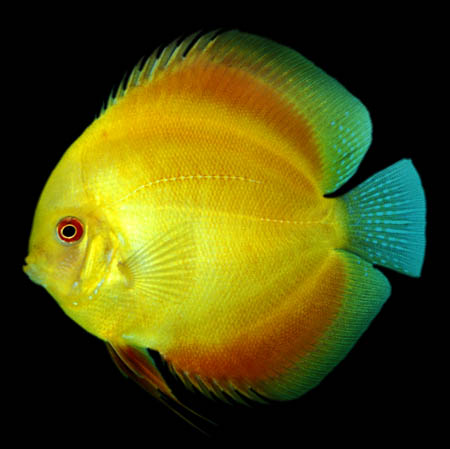
Captive bred discus Symphysodon aequifasciata (SeriouslyFish.com)

They are called the kings of the aquarium and for good reason. Growing to approximately the size of a CD and coming in rainbow of colors, discus make an impressive sight in an aquarium.Their unusual shape and myriad of colors are what first grabbed my attention, but I was hooked when I saw them swimming in an aquarium. They are so graceful! But with that grace and beauty comes a great amount of care. This coupled with their cost doesn't make them a fish for beginner or even most intermediates. It also makes them difficult to pair with other fish; it's not that they are aggressive, but it's that they need very warm, soft, and acidic water.

5. Cardinal Tetra (Paracheirodon axelrodi)

Cardinal tetra shoal (Leino88 @ Flickr)

Another one of the few fish that can withstand the high temperatures discus need, they also rival discus in coloration. Those blue streaks stand out across a room and make them the most beautiful tetra in my opinion. Up close the deep red streak that runs their full body length becomes apparent. Their relaxed and calm nature makes them a great pair with other beautiful fish like gourami and discus. Whether they are in a loosely shoaling group of 12 or in a tight shoal of 50 these tetra stand out in a tank and in my heart. If I could have any tetra in a tank, it would be these guys.

4. Fighting Fish (Betta splendens)

One of my personal bettas, Lumi the halfmoon plakat

A lot of people call these little fish with a big attitude, and I'm more than inclined to agree. Every single betta I've owned has been very personable. Those long flowing fins entice many people in, but I am more fond of the rainbow of colors they come in. Another one of my favorite things about bettas is their adaptability to smaller tanks and different water parameters. Bettas were the only fish that I could have in my 5 gal tanks while I was in college. They will also do well in hard or soft water, so you can keep them no matter what your tap water is. 

3. Kuhli loaches (Pangio spp)

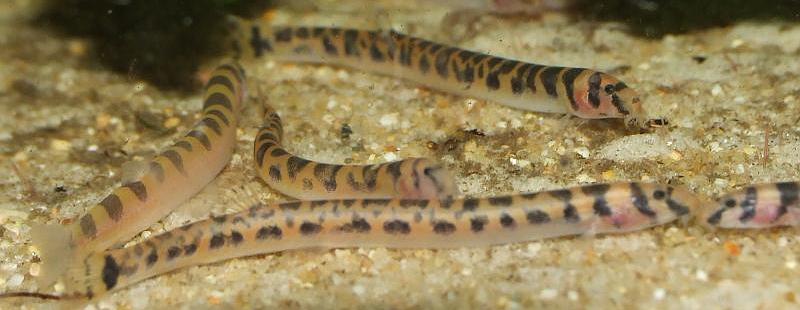
A group of Pangio shelfordii (SeriouslyFish.com)

Along with the twig catfish, these little guys are some of the strangest looking fish on my list because they don't look like fish! They look like little worms! This is especially true of the brown species. Kuhli loaches have squirmed their way into my heart. Just like the botine loaches they are full of energy and spunk. They like to drape themselves in odd positions around the tank and use those adorable whiskers to sniff out food. They love the company of other loaches and it's not uncommon to see three or four squished together in the same hidey-hole. Many people have trouble with these guy hiding a lot, but I never have. I think it's because I give them enough hiding spaces that they feel comfortable to come out all the time. 

2. Goldfish (Carassius auratus auratus)

My two current fancy goldfish, Magikarp and Burbbles

Years ago when I was a young girl, these bubbly little fish stole my heart. My knowledge of their care and love of them have only increased through the years. Yes they need large tanks and lots of water changes, but it's worth it for those wiggly bodies and cute faces. I can't imagine my life without goldfish.

1. Koi (Cyprinus carpio)

Byakko, my shiro utsuri koi. Taken in 2011.

While not a true aquarium fish, they are a big part of the hobby and one of my favorite fish. But they didn't start out that way. I never really appreciated them until my little koi that I bought back in 2007 grew into 18 inch (45 cm) beauties. I spend hours in the summer just watching them swim around the pond. In the store, they do just look like large goldfish, but when they are grown there is nothing that rivals their beauty and grace. 

I am lucky enough to own a good number of these including goldfish, bettas, koi, kuhli loaches, and twig catfish. One day I will have all of these fish, but some like the botine loaches and discus are potentially a decade away. It's good to have dreams.

Saturday, February 2, 2013

Is my fish a girl or a boy?

How to determine the sex of your fish

Most people like to name their fish and want to have a name that fits the fish’s gender. Other people want to try breeding and need to know if they have males and females. Sexing fish can be a tricky thing, but there are some species and families of fish that are relatively easy. Before we get into those, I’ll talk about some general trends in sexing fish.

Females are rounder

Of course this only works with mature animals, but for the most part the female will have slightly thicker bodies. This is because the eggs that females carry take up more space than sperm. The females also need larger fat reserves to produce the eggs.

Males are smaller and more colorful

Just as in birds, males are the more colorful of the genders. Males compete with other males by showing off their vibrant colors. The most colorful male gets to mate. They are also slightly smaller than the females.

Sexing popular fish

Goldfish (Carassius auratus auratus)

These fish can actually be a little tricky as they have no obvious differences when the fish are not breeding, but there are two things you can look for when they breed: breeding stars and the shape of the vent.

Breeding stars or breeding tubercules will only appear on the males. They appear on the gill plate and pectoral fins. These are a sign of virility, and a study performed on a relative of the goldfish found a correlation between the number of breeding stars and how healthy a male fish is. These stars help a female fish decide who she wants to mate with.

Breeding stars on pectoral fin and gill cover (goldy fk @ flickr)

The next thing to look for is the shape of the vent (this is also called the cloaca and is the opening near the anal fin). The vent of the male will be slightly larger and concave (meaning it curves inward). The vent of the female will be smaller and protrude slightly. The pictures below better illustrate this.

Circled male vent (mikroll @ TheGAB)

Circled female vent (mikroll @ TheGAB.org)

I find using the vent method to be a little difficult as my goldfish usually like to have their heads facing towards me begging for food. I prefer to use the breeding star method because they are more visible in my experience.

Betta fish (Betta splendens)

These small, popular tropical fish are a little easier than goldfish to sex because some of it can be done out of the breeding season. There are two main ways to sex bettas: fin length and the presence of an ovipositor.

If you see a long-finned betta it is a male. There have been cases where females have longer than normal fins, but they aren’t nearly as long as the typical halfmoon spread seen below.

These extremely long fins indicate a male(Aquariumloto @ Flickr)

Sexing bettas gets a little trickier when you are dealing with plakat (or short-finned) bettas because the male and female fins are the same length. Now you have to look for the ovipositor on the female. The ovipositor is a small white tube protruding from the vent of the female; in breeding she uses this to position eggs. It will appear as a small white dot behind the ventral fins. The lack of such indicates a male.

Arrow points to ovipositor (Stuart Halliday)

Angelfish (Pterophyllum spp)

Another extremely popular aquarium fish, but much harder than bettas or goldfish to sex. They have no discernible differences when they are not spawning, and when they are spawning you have to look very closely to see the only difference:  the males will have a thinner breeding tube which is visible in the vent of the fish. Both males and females have breeding tubes, so the key is to look for the smaller one.

Female angelfish breeding tube (koiangelfish.com)

Male angelfish breeding tube (koiangelfish.com)

Neon tetra (Paracheirodon innesi)

Like angelfish, neon tetra are difficult to sex. The only difference will be in size. The females will be slightly larger and fatter especially when they are ready to breed. Males may show slightly better color, but these differences are so minute that they will likely go unnoticed.

Livebearers (Poecilidae)

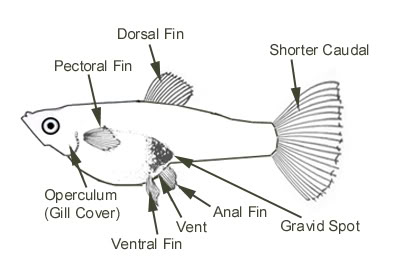
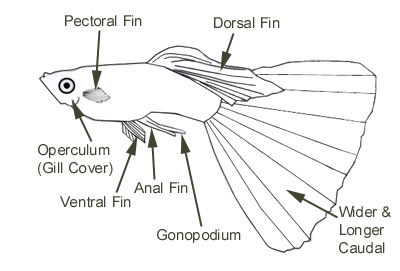
These are fish like guppies, platies, swordtails, and mollies. The males and females are very easy to tell apart. There is a large size difference with some females being almost one and a half times the size of the males. The males will have long, flowing fins and are very colorful. Males also possess a modified anal fin called a gonopodium; this is used to transfer sperm to the females. Below you can see two illustrations showing the differences between male and female guppies

General female livebearer characteristics (jabraguppyroom.blogspot.com)

General male livebearer characteristics (jabraguppyroom.blogspot.com)

Cory catfish (Corydoras spp)

Another popular but difficult fish to sex, cories have no highly visible differences between the genders. Females will tend to be the larger ones and look much chubbier when they are breeding, but for the most part males and females look exactly alike.

Bristlenose pleco (Ancistrus spp)

These small plecos are surprisingly easy to sex. Both males and females will have the bristly nose, but the number and size of the bristles will be much greater in the males. This is especially true when the fish are in breeding condition. Scientists believe that males evolved the bristles to mimic young fish because females are more likely to mate with a male who is already caring for eggs.

Male bristlenose with month old offspring (goldy fk @ Flickr)

Oscar (Astronotus ocellatus)

Probably the most popular of the cichlids next to angelfish, but even more difficult to sex. Among wild populations the males show more color than females, but this isn’t reliable with the captive-bred fish that show up in stores nowadays because they have been bred for color.

Cherry barb (Puntius titteya)

This is a species that is easy to sex based on the general trends in fish genders. The males are smaller and have more red color and the females are larger and will be more brown in color. This holds true with wild-caught and naturally bred cherry barbs. There are some that have been specifically bred to make the red even brighter; these are much more difficult to gender. 

Female cherry barb on left, male on right (aquapage.cz)

Gourami

They aren’t as easy to sex as livebearers, but they are pretty easy if you know what to look for. If it’s not a captive-bred variant, the males will be a brighter color especially when breeding. If they are a color variant you have to look for a few other things. For the Trichogaster gourami (this is dwarf, honey, thicklips, and banded) look at the end of the dorsal fin; males will have a pointed dorsal, and females will have a rounded dorsal. These pictures below illustrate this as it can be hard to pick out if you’ve never seen it.

Male honey gourami (CK Yeo @ Flickr)

Female honey gourami (CK Yeo @ Flickr)

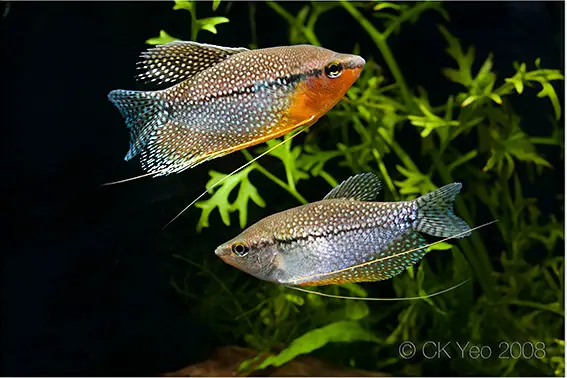
For the Trichopodus gourami (opaline, three-spot, blue, gold, pearl, and moonlight) you also look at the dorsal fin. The males will have a longer dorsal fin. Males of the pearl and moonlight species will show more red color than the females.

Pearl gourami. Male above, female below (seriouslyfish.com)

With some of our aquarium fish it can be very easy to tell the males from the females, but others can give you a lot of trouble. Some like oscars and angelfish can even give breeders trouble in determining gender. If you wish to breed any of these fish, I highly suggest you do a lot of research and read personal experiences. While breeding can be fun and rewarding, it can also be costly and heartbreaking when done incorrectly.

Works referenced

Christie F. 2006. Sexing Bettas: The Ovipositor. nippyfish.net. Retrieved: 31 Jan 2013

How to tell Male and Female Guppy Apart. Jabraguppyroom.blogspot.com. Updated: 29 July 2011. Retrieved: 1 Feb 2013.

Kortet R., J. Taskinen, A. Vainikka, and H. Ylonen. 2004. Breeding Tubercles, Papillomatosis and Dominance Behavior of Male Roach (Rutilus rutilus) During the Spawning Period. Ethology 110:591-601.

Seriously Fish

Sexing Angelfish. Koiangelfish.com. Updated: 2013. Retrieved: 1 Feb 2013. 

Sexing Goldfish. Bristol-aquarists.org.uk. Updated: 26 October 2012. Retrieved: 31 Jan 2013

Sexing Goldfish. theGAB.org. Updated: 16 Aug 2009. Retrieved: 31 Jan 2013

Monday, December 31, 2012

Other ideas for that small fish tank

I've seen a lot of cases where someone buys a betta and a bowl. They do get a heater for the bowl once they know the requirements of bettas. Then on down the line they upgrade to a 5 gal or a 10 gal tank. Now they have this bowl just sitting around. It's still large enough (but just barely) for a betta, so while it's still empty there is still that temptation to get another betta. Here are some nifty ideas to fill that bowl with things that aren't bettas. 

Shrimp Tank

Level of difficulty: Varied

There are a few variety of shrimp commonly found in pet stores. Ghost shrimp are most common. Red cherry shrimp can be found in some stores or from other hobbyists online. There are a lot of other varieties that can be found in specialized shops, but it's good to keep in mind that some are more difficult to care for than others. Shrimp are tropical creatures so they they will need a heater. They appreciate live plants and the benefits they bring, but you can just use low-light plants like anubias, java moss, and java fern. Shrimp have a very small bioload compared to fish, so you can have quite a few in a smaller tank. Some species also breed easily in aquariums. Just like fish, they will need some kind of regular maintenance.

Red cherry shrimp (Planetinverts.com)

Plants only Tank

Level of difficulty: Varied

A well-aquascaped tank even without fish can be a very striking thing. With a black background and black sand, the green plants pop. Add some rocks and driftwood to really complete the picture. This tank could be very easy or rather difficult depending on your choice of plants. Low-light, low-maintenance plants like anubias, java moss, and marimo moss balls can be grown with the ambient light from a window and little to no fertilizer. Marimo moss balls don't even need heaters. If you want a bit more of a project, you can have plants like crypts and dwarf hairgrass. These plants require enriched substrates, CO2, and in some cases high lighting.

Bowl planted with hornwort, java fern, and moss (plantetank.net)


Snail Tank

Level of difficulty: Moderate

While some people think them gross, a lot of people enjoy having snails in their aquariums for the benefits they offer as well as their interesting locomotion. A small tank without a betta is a great place to have snails. With larger snails like apple snails and rabbit snails, you could only have one, but with smaller snails like malaysian trumpet snails or ramshorn snails you could have quite a few. You will have to pay more attention to water quality and parameters as soft, acidic water will dissolve their shells. Larger snails like apple snails and rabbit snails will need to be fed, but the small snails can scavenge enough food from algae and biofilm supplied by water changes. Most snails will only eat dead and dying plant matter so you can combine them with a planted tank without worry. 

Golden rabbit snail (source)


Terrarium

Level of difficulty: Easy

One idea that people don't normally think about is removing all the water from the bowl. If you have a sunny spot in your house or office you won't need a light. Some aquarium plants can be grown on land if the soil is moist enough, or you could take house plants and pot them in the tank. Moss terrariums are another option and don't need to be watered often if the tank has a top that reduces evaporation. If you're worried that other house pets might get into the terrarium, you should plant species that are okay to be nibbled on by cats and dogs or get secure lids.

Moss terrarium in a bowl (mountainmoss.com)

I know that temptation to buy another betta when you have extra bowls and tanks laying around is very strong. I've fallen prey to it a few times, and I can tell you the best way to reduce that temptation is to fill those extra bowls with something else. My extra tanks are currently being used as moss terrariums and Marimo aquariums.

Friday, December 7, 2012

Goldfish Garden

Good Idea... Wrong Fish!!

Aquaponics is a type of sustainable agriculture that combines traditional aquaculture of fish with  hydroponically grown plants (plants grown with roots submerged in water). The fish are grown in large holding tanks, and the waste they produce is pumped to the plants in the hydroponic systems. The plants use the nutrients and send the "clean" water back to the fish. That is the general idea behind aquaponics, but there are a few variations. Recently, I have seen a few products come on the market aimed at home aquaponics systems. Some are good, and some are bad. This is one of the bad ones I recently stumbled upon.

Artist's rendition of proposed Goldfish Garden

Some quick facts about this product: it holds 2 gallons (7.6 L) of water; is powered by a 1.5W air pump; is 6.5 inches (16.5 cm) wide; and can come with a light if it cannot be placed near natural light. More information can be found on their kickstarter page.

The entrepreneur claims that goldfish are the best candidate for the bowl because of the amount of waste they produce, but he neglects to mention that they will outgrow a tank like this in a matter of months. He also fails to state any need for water changes. Not only do fish need clean water, but plants need it, too. Plants use up minerals that are in the water like calcium, magnesium, and iron. The only way to replace these minerals is with a water change, something that is rather commonplace in normal aquaponics operations. He also fails to mention any additional fertilizer that will likely be needed for healthy plant growth. Fish only produce nitrogenous wastes, but plants need many other micro and macro nutrients for complete and healthy growth.

He does mention that other fish can be used in the system and even mentions a slot for a heater to enable tropical fish to be used in his system. This is a very smart idea, and I believe this product could be better marketed and used with creature suited to living in a (relatively) small environment their whole lives such as betta fish, small snails, or shrimp.

Or you could save a few hundred dollars by buying a 10 gal tank with a single T8 and putting the plants in with your fish. That's where my vote is!

Monday, November 5, 2012

Color Changes in Bettas

As anyone who has keep bettas for a long period of time knows, they are apt to change colors. What you see in the cold cup in the store is never what you will see after a few days of warm, clean water in your tank. For this reason, bettas bought in pet stores are often gambles. You can buy a pretty white one in the store and it will turn a peachy-yellow in a few days. There are three reasons why bettas change colors: stress, age, and genetics.

Stress


All fish are known to change colors when stressed. Most of the time this is a whiting out or a dulling of their colors. In pet stores almost all fish are stressed. The tanks are crowded and often contain diseases. While the cold cups may not always contain disease, they will stress tropical fish like betta. And just like any other fish, the colors of the betta will dull and fade. The transformation from stressed fish to unstressed fish can take a matter of hours or sometimes days. This is the main reason betta change color when you first get them. 

This is the same betta. On the left is the betta in a cold cup in the store.
On the right is after a month of being in clean, warm water.


Age


Often the fish you see sold in store aren't very old. Typically the smaller they are, the younger they are. Their colors haven't fully developed yet and neither have their fins. So essentially what you are buying is a "work in progress." Some will change more than others as not all bettas being sold are the same age. Below is a very young betta that I bought in July 2011.

This image shows the same betta from July 2011 to February 2012.
Notice the longer fins and more pronounced color.

Genetics


Some betta carry what is called the marble gene. This gene sequence causes the betta's colors to  changing even after they should have stabilized with age. Sometimes the betta will continue to change his whole life even looking like a whole different fish a year after you buy him or her. Sometimes the betta will "marble out" and become a cellophane, and some "unmarble" and turn a dark, solid color.  There is no way to predict what you will end up with. This presents an interesting challenge to breeders, and they can be a neat fish to have as a pet. A month later you can end up with a completely different fish than you started with!


This is my marble plakat. The image on the right is from July 2012. The middle image is a
month later. The far right image is from October 2012. My marble has unmarbled
to a beautiful solid blue.


Works Referenced


Parnell, Victoria. 3 Mar 2006. "The Ever-Changing Marble." bettysplendens.com. Retrieved 4 Nov 2012. 

Thursday, September 6, 2012

Fish and Thunderstorms


Storms have an effect on our fishy friends (Kevin Rank @ flickr)

Ever wondered why your fish always seem to be more active right before a thunderstorm? Bettas will build larger bubblenests. Loaches swim more frantically than normal. Tetra start breeding behavior. This isn’t just coincidence. Our fish do react to changes in the weather. 


Male golden gourami (Trichopodus trichopterus)
attending to bubblenest (Alberto Garcia @ flickr)
 Most fish in the hobby come from tropical waters where there are only two seasons: wet and dry. During the dry season, the water recedes and all the fish are cramped together. Competition for food and shelter is high. The dry season is ended by huge rainstorms, sometimes called monsoons. These, like any thunderstorms, are preceded by a huge drop in barometric pressure which fish can sense using their swim bladders. Through the millennia fish have learned that these huge drops in the air pressure mean rain and therefore more water is coming. This reduces the competition for food and shelter. With more resources, the parents won’t be in strong competition with their offspring. The adults can reproduce without fear that their offspring won’t be able to find enough food.

Fish also associate the drop in air pressure with reduced visibility at a later time. Storms and heavy rains will dirty up the water both by wave action and the runoff from the hills. As many fish are sight-predators and can’t hunt in murky waters, the drop in air pressure sets off an insane hunger drive. In the wild they ravenously feed until the water starts getting muddy or the thunder scares them into hiding. They do this because the water has can stay muddy for a few weeks at a time depending on the severity of the storm.

Sight predators like oscar (Astronotus ocellatus) and many cichlids have
high food food drives before a storm (Brynja Eldon @ flickr)


So while we may have taken the fish out of the wild, we still can’t take part of the wild away from the fish. Whenever the barometric pressure begins to drop, they still think the monsoons are coming! 

Sunday, July 22, 2012

My Tanks: 22 July update

So almost a month later, a lot has changed with my tanks. But all of the changes have been for the good.

The amazon sword has done well in the goldfish tank. I'm thinking about adding a root tab to boost it's growth; I would really like two huge swords in that tank. The hornwort has also taken off. It's really helped bring down the nitrate level in the tank. I will certainly need help with that when I add the newest goldfish to the tank.


The biggest change is the betta tanks. I ordered a double-decker stand and stacked them. Basically I can fit two tanks in the space that one would normally take, and run both filters from one air pump. I highly recommend this for anyone who is having trouble finding places for more tanks. I got the stand from Drsfosterandsmith.com for a very reasonable price. They come in sizes up to 55 gallons and are of a rather sturdy make. Industrial strength shelves also work if the tanks aren't going to be on display such as what you would find in someone's fish room.


So the other day I went into Petco looking for something (can't remember what), and I made the mistake of looking at the bettas. I saw this beauty a halfmoon king betta being sold as a plakat halfmoon. Kings usually sell for $25 around here, but I got this beauty for only $14 because he was miss-marked. His name is Lapis, but my mother likes to call him Captain America because of his patriotic colors. He is currently in the 29 gallon.


The changes to my 29 gal community were the most challenging ones. Removing the gravel and then adding the sand was a pain in the rear (and back and head and knees). The sand just didn't want to work with me. I used Estes Ultra Reef, and it looks great (it's also really soft so it won't hurt the kuhlies). I don't care what anyone says, it should be at least rinsed before going into the tank. At the very least it gets rid of a lot of air bubbles (which was my main problem). I've also added pygmy chain sword (Helanthium tenellum), dwarf sagittaria (Sagittaria subulata), and Rotala indica that I bought from Aquariumplants.com (very pleased with their service and quality of the plants and packaging). This is the first step in making this my first fully planted community.


My baby goldfish is still in QT mostly because I want him to grow more before I add him to the main tank. He's gotten bigger, but still not big enough for me to feel comfortable with him in the big goldies. 


Thursday, June 21, 2012

Betta Fish Awareness Day 2012

Today is Betta Fish Awareness Day 2012! Time to get out and spread the word about proper betta care!

Click to enlarge (American Betta Fish Association)

This lovely brochure created by the betta enthusiasts and breeders at the American Betta Fish Association also comes in a black and white form that can be printed out. Post this brochure around town at local pet stores and vet clinics to spread the word about proper betta care. Always remember to be kind and courteous when you do. As my grandfather likes to say, you get more with sugar than you do with salt.

Another way you can participate is to sign and let others know about this petition to convince Petsmart to stop selling tanks that hold less than a gallon of water. Stores in the UK don't sell these tiny tanks. Let's help US chain stores jump on the bandwagon. Just to be clear, the petitioners have no problem with breeders keeping fish in these small tanks because breeders understand the needs of these fish. But when a large store like Petsmart markets these small tanks to new betta keepers and doesn't properly explain how to clean and safely heat tanks like this, it leads to unnecessary mistreatment of the fish.

Let's face it. There is a problem with the way most store sell bettas (and goldfish). While regulations against small tanks might do a bit, a betta in a dirty, unheated 2.5 gallon bowl isn't better off than a betta in a clean, heated 1 gallon bowl. The only way to save these beautiful fish from that horrible fate is to educate the public and pet store workers. And that is what today is all about. 

(copperarabian @ Deviantart)

Tuesday, May 29, 2012

Best and Worst Beginner Fish

I see a lot of people ask “what fish should I start with?” I also see a lot of people starting with fish that they were lead to thinking were easy.  Most people want a tank full of beautifully colored fish. I understand this, but often the most beautiful fish are also much more delicate. However, there are some very pretty and hardy fish with which you can start your hobby. They may not look like much in the store tanks, but once you get them home and into a good setup, they will show their true colors for you.

Through personal experience and discussion with other aquarists, I have gathered a list of fish that are good for the budding fishkeeper. These fish were chosen for their hardiness (ability to survive a cycle and live in less than ideal conditions), adaptability (can live in a wide range of parameters), small size (ideal for the first aquarium), and peacefulness. I have also compiled a list of fish that beginners should avoid for various reasons such as size, aggressiveness, and sensitivity.

Before I go into the fish, let me take a minute to explain what a good first aquarium size is. While bigger is always better, the beginner might not want to start with a massive tank of 55 gallons (209 L) or larger. This is a big tank (and a big expense), and big tanks mean big water changes which a new aquarist might not want. Conversely a 10 gallon (40 L) isn’t a great beginner tank because it is so small, and small tanks can have fast and dangerous water parameter swings. Also you can only fit one or two species of fish in a tank of that size. I’ve come to believe that tanks from between 20 gallons (75 L) and 40 gallons (151 L) make great beginner tanks because they are large enough to be mostly stable but not too large as to be a pain to perform water changes and they enable the first time fishkeeper to keep more than two species. 

The Bad Choices


Many fish that the pet stores tout as easy and great for beginners are far from that for many reasons. Some grow too large, some are hard to keep alive, and some are aggressive. Since there is a multitude of fish that would make poor first choices, I’m going to group them into categories and give you examples of fish that fall into these categories.

The first category of poor beginner fish are chosen because they get so large. They are sold as cute, inch-long babies, but they will soon be busting the walls of a normal beginner aquarium. These fish include goldfish (Carassius auratus auratus), common pleco (Hypostomus plecostomus), oscar (Astronotus ocellatus), and kissing gourami (Helostoma temminkii). Many people are surprised to see goldfish on this list because all you see in the stores are cute little goldfish. Trust me: these little golden wonders will soon be around a foot long and all the while they grow, pooping like a fiend. They are a hardy fish, but they just get too large for most beginners to handle.

You also don’t want to start off with a fish that is too sensitive. Oto catfish (Otocinclus macrospilus), angel fish (Pterophyllum spp), cardinal tetra (Paracheirodon axelrodi), and many more fall into this category. They should never be introduced to a cycling tank (tank where colonies of beneficial bacteria are not established and harmful levels of ammonia and nitrite are present) because they can’t handle the stress of a cycle. Oto catfish specifically need a setup that has had time to grow algae because they primarily eat algae. They come to stores starving because they are captured from the wild where they only eat algae. By the time they get to the store they haven’t seen any in weeks; they will starve to death in a brand new setup because it lacks algae.

Another mistake that beginners often make is buying fish that are too aggressive to keep with much else; they end up with a moderately large tank and nothing in it but a single school of fish. Or they buy a “freshwater shark” because the name sounds cool, and then end up with a tank full of fish cowering in the corner trying to stay away from the shark’s bullying nature. If you just want to keep a school of these fish or a freshwater shark, then go right ahead, but you won’t be able to add anything else to the tank. Fish that fall into this category are tiger barbs (Puntius anchisporus), black skirt tetra/black widow tetra (Gymnocorymbus ternetzi), and the freshwater sharks like rainbow shark (Epalzeorhynchos frenatus), bala shark (Balantiocheilos melanopterus), and red-tailed shark (Epalzeorhynchos bicolor).

Guppies (Poecilia reticulata) are a great beginner fish, right? You’d be surprised to learn that they are not. They were many years ago, but commercial scale breeding and continuous inbreeding has made what was once an extremely hardy fish into a weak, disease-ridden fish terrible for beginners. If you can find guppies from a hobby breeder, then you have the chance to get some good fish, but pet store guppies are so weak, they can hardly be considered a good fish anymore. Sadly, neon tetra (Paracheirodon innesi) and dwarf gourami (Trichogaster lalius) have also gone down this same route. Commercial-scale breeding programs are now producing weak, inbreed, and disease ridden fish. In fact, both fish now have a disease named after them because these fish so commonly carry them: dwarf gourami iridovirus and neon tetra disease. These diseases have no cure and can spread to other species.

I know you want to start off with strange and unusual fish to wow your friends, but these fish are usually delicate, difficult to keep alive, and have specific needs. This brings me to my final category of fish that are bad for beginners: the oddballs. These are fish like the black ghost knifefish (Apteronotus albifrons), German blue ram (Mikrogeophagus ramirezi), and African butterfly fish (Pantodon buchholzi). A good rule of thumb is if it looks strange, it’s going to be hard to keep alive. 

The Good Choices 


Don’t despair. While those are fish you shouldn’t start with, you have plenty of attractive and interesting options that can be your first fish. Instead of grouping them like the bad beginner fish, I have listed them out with pictures and general care information. All of these fish are not picky eaters and will readily accept any flake or pellet food.

Blue Tetra (Catxx @ the Aquarium Wiki)

Blue Tetra, Cochu (Boehlkea fredcochui)
Tank size: 20 gallons, 24 inches long (75 L, 61 cm)
Temp: 72 - 79F (22 - 26C)
pH: 6.0 - 8.0
Water hardness: up to 15 dGH
Notes: Like most tetra species this is a schooling species and needs to be maintained in groups of 6 or more. When buying schooling fish like this it is best to buy about 9 so in case you have a death, these fish won’t start bullying other fish. Don’t keep them with fish with long fins like betta fish. This fish will be most colorful in an aquarium with lots of cover such as decorations and plants (live or fake).

Group of Flame Tetra (Catxx @ the Aquarium wiki)

Flame tetra, Fire tetra, Von Rio tetra (Hyphessobrycon flammeus)
Tank size: 20 gallons, 24 inches long (75 L, 61 cm)
Temp: 72 - 82F (22 - 28C)
pH: up to 7.8
Hardness: up to 25 dGH
Notes: This is another gorgeous and hardy tetra species. They should be kept in a minimum of 6, but keeping them in larger numbers will make them more attractive and reduce the nipping tendencies common with tetra. Don’t keep them with slow-moving fish. It will show its best colors in an aquarium with lots of decorations such as fake or live plants.

X-ray tetra (Debivort @ Wikipedia)
 
Pristella tetra, X-ray tetra, X-ray fish, Goldfinch tetra (Pristella maxillaris)
Tank size: 10 gal, 20 inches long (40 L, 50 cm)
Temp: 74 - 82F (24 - 28C)
pH: up to 8.0
Hardness: up to 30 dGH
Notes: In my opinion, this is one of the best beginner fish because it is so easy to keep. It will survive in all but the most hard of municipal water supplies. Like all tetra, it should be kept in groups of 6 or more at a minimum.

Bronze cory cats (public domain)

Bronze Cory Cat, Albino cory (Corydoras aeneus)
Tank size: 20 gal, 24 inches long (75 L, 61 cm)
Temp: 70 - 80F (21 - 27C)
pH: 6.0 - 8.0
Hardness: up to 20 dGH
Notes: Also found in an albino form, the bottom-swimming bronze cory is a great addition to a new fishkeeper’s aquarium. They will do best with a sand bottom but can manage with smooth gravel. It will be most active when kept in groups larger than 5. Three is the minimum that should be kept together as these fish are very social.

Two harlequin rasbora (Stee @ flickr)

Harlequin Rasbora, Red rasbora (Trigonostigma heteromorpha)
Tank size: 20 gal, 24 inches long (75 L, 61 cm)
Temp: 70 - 82F (21 - 28C)
pH: below 7.5
Hardness: up to 15 dGH
Notes: A common fish in pet stores, it is a great choice for a beginner. This is another social fish that needs to be maintained in groups of 6 or more, but it will fare best with groups of 10 or more.

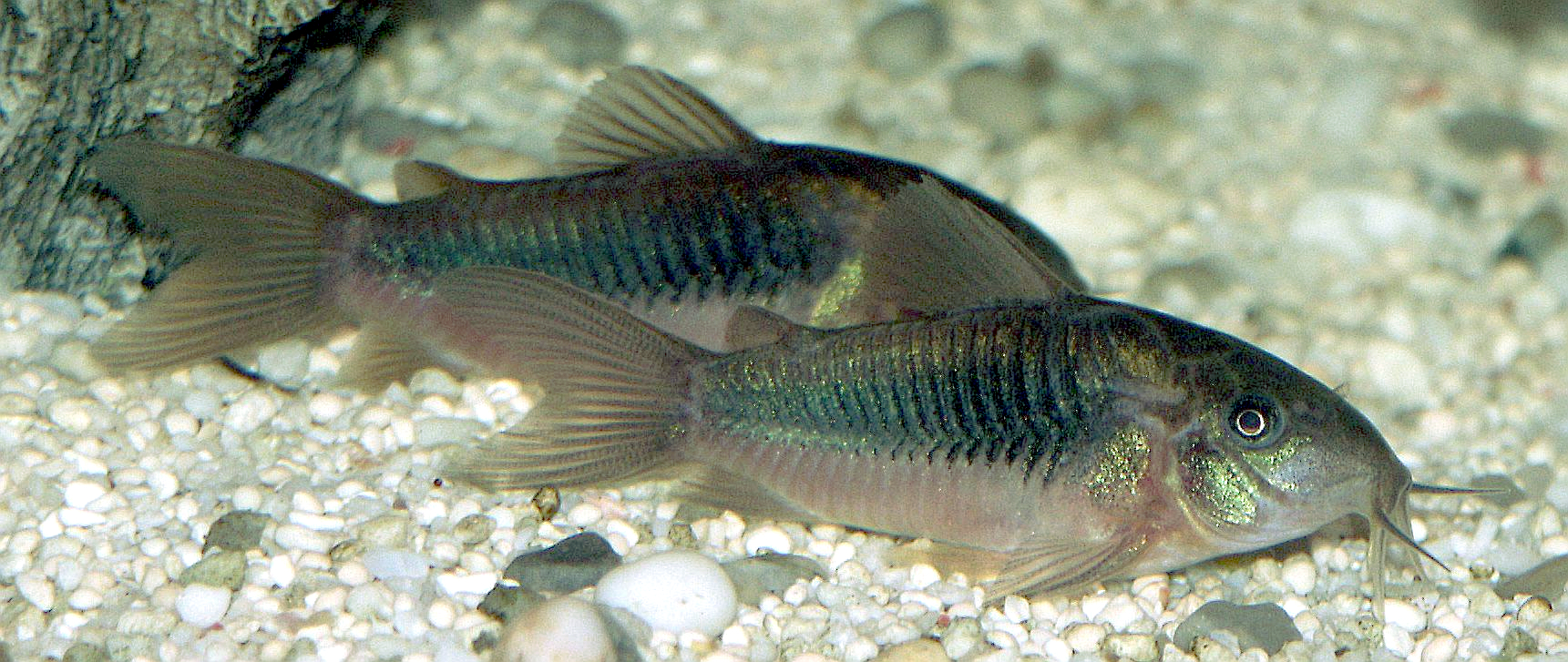
Two Bandit cories (Stuart Halliday)

Bandit cory, Masked cory (Corydoras metae)
Tank size: 10 gallons, 20 inches long (40 L, 50 cm)
Temp: 70 - 77F (22 - 25C)
pH: up to 7.5
Hardness: up to 15 dGH
Notes: As they are more shy than bronze cories, they should be kept in groups of 6 or more. They will be much more active in larger groups. When kept singly or with 1 or 2 other bandit cories, they will not be seen much and may be too shy to feed. They like a sand bottom best as they enjoy rooting around in the sand for morsels of food.

Regular zebra fish (public domain)

Glofish, genetically modified zebra danio (www.glofish.com)

Zebra danio/glofish (Danio rerio)
Tank size: 20 gallons, 24 inches long (75 L, 61 cm)
Temp:  65 - 77F (18 - 25C)
pH: 6.0 - 8.0
Hardness: up to 20 dGH
Notes: Also sold as the brilliantly colored glofish, these peaceful little schoolers make a much better candidate for a smaller unheated aquarium than goldfish do. The zebra danio that are sold as glofish aren’t dyed. They are actually genetically engineered to be that way by having jellyfish and coral genes implanted in their own. They will pass this down to their children, too. Like all schooling fish, these active little swimmers need at least 6 of their own kind to feel safe (you can mix glofish and the regular zebra danio). As a precautionary, I feel like I need to mention that due to massive inbreeding, this fish are becoming less and less hardy; one day they might not be good beginner fish.

Glowlight tetra (gonzalovalenzuela @ flickr)

Glowlight tetra (Hemigrammus erythrozonus)
Tank size: 20 gal, 24 inches long (75 L, 61 cm)
Temp: 74 - 82F (24 - 28C)
pH: up to 7.5
Hardness: up to 15 dGH
Notes: Like all the other tetra, this little beauty is a schooling fish and should be kept in groups of at least 6, but if you have the room and biological capacity add as many as you can. They are most colorful in large groups. An albino form is also seen and is just as hardy as the normal form. The albinos will school with the regular glowlights.

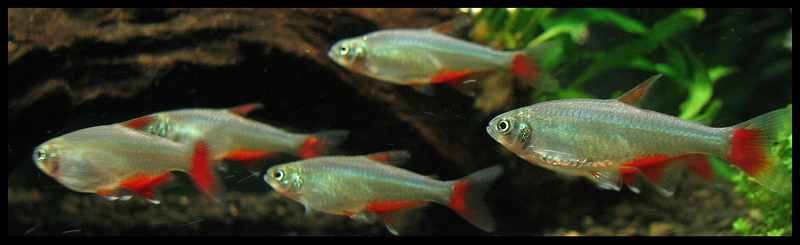
School of bloodfin tetra (public domain)

Bloodfin tetra (Aphyocharax anisitsi)
Tank size: 20 gal, 24 inches long (75 L, 61 cm)
Temp: 64 - 82F (18 - 28C)
pH: 6.0 to 8.0
Hardness: up to 30 dGH
Notes: This fish gets my vote as the best beginner species. It can survive a wide range of water parameters and is commonly found at petstores. Kept in groups of 6 or more, its brilliant red fins will sparkle in the water.

Male cherry barb (Sannse @ wikipedia)

Cherry Barb (Puntius titteya)
Tank size: 20 gallons, 24 inches long (75 L, 61 cm)
Temp: 74 - 81F (23 - 27C)
pH: 6.0 to 8.0
Hardness: up to 20 dGH
Notes: Barbs, like tetra, need groups of 6 or more to feel safe. They will be more colorful and be out in the open more if they have large groups. Unlike the tetra, the males are more colorful than females. The males have a much more red color while the females take on a yellow-brown hue.

Male swordtail on left; female on right (MacAnthony @ flickr)

Swordtail (Xiphophorus hellerii)
Tank size: 29 gallons, 30 inches long (109 L, 76 cm)
Temp: 68 - 82F (20 - 28C)
pH: 7 to 8
Hardness: 9 - 30 dGH
Notes: As this fish is a livebearer it is the best choice for a new aquarist with hard water. The catch is, if you put males and females in a tank together, you will get more swordtails. If you don’t want baby fish, get only males. If you want baby fish, make sure there are 3 females to every male. Males are also the more attractive of the sexes, so an all-male tank would be ideal for a beginner. Pretty and you don’t have to worry about babies.

These next two fish are good beginner choices, but they come with a catch which I will highlight in italics.

Male betta (copperarabian @ deviantart)

Betta fish/Siamese Fighting Fish (Betta splendens)
Tank size: 5 gallons (18 L)
Temp: 76F - 84F
pH: 6.0 - 8.0
Hardness: up to 20dGH
Notes: Betta fish are a great first fish if they are the only fish in the tank. They are very hardy, easy to care for, and will generally take any beginner mistakes in a stride. Their small tank requirement also makes them great as a dorm pet. Due to their aggressive nature, keeping betta with other fish makes the difficulty go up and can be a bit much for a new fishkeeper. Keep him in his own 5 gal tank and you will have an easy setup with a very interactive fish.

Male honey gourami (Kooshking @ flickr)

Honey gourami (Trichogaster chuna)
Tank size: 20 gal, 24 inches long (75 L, 61 cm)
Temp: 72 - 82F (22 - 27C)
pH: 6 - 7.5
Hardness: up to 20 dGH
Notes: This little jewel is the smallest and most peaceful of the gourami. It will make a great centerpiece fish in a small tank provided it is the only gourami in the tank. This also includes bettas as they are gourami, too. Male gourami are territorial and will fight when placed in the same tank. The males are the most colorful, so just one would be the perfect addition to a beginner’s tank.

Don’t feel limited by what the pet stores tell you are good beginner fish (because they are often wrong). The beginner has many attractive options for their first fish tank. As I discuss in my How to Stock a Fish Tank article, combining a species of cory cats and a school of tetra in a 20 gal tank could make a very nice display for the first-time aquarist. While not all of these fish may be available at your local pet store, I’m sure you will be able to find some of them to help you get started in your fishkeeping hobby.

Works Referenced


Monks, Neale. 2008. “Fish Viral Disease.” www.fishchannel.com. Retrieved 28 May 2012.

Monks, Neale. 2011. “Neon Tetra Disease.” www.fishchannel.com. Retrieved 28 May 2012.

Ramsey, Graham. 3 March 2010. “Top Ten – worst beginner fish.” fcas.wordpress.com. Retrieved 27 May 2012.