Friday, March 29, 2013

Just One Fish

The Problems of Aquarium Release 

A lot of people buy fish that grow too large for their aquariums. Most times it isn’t their fault as pet stores often don’t inform people how large their goldfish, oscar, or pleco will grow. A couple of years down the road, these massive fish can cause problems for unsuspecting aquarists. Some stores will take back overgrown fish and try to re-home them, but this is costly for the store.

Oscar in a 20 gal (Oscarfish.com)

Many times these large pets are just released into local lakes and rivers because people assume just one fish won’t cause any harm. This leads to things like a pacu being caught in North Carolina and Utah. This is by no means good, but it isn’t the end of the world as most of these fish die when winter comes. But what happens when you get a cold-tolerant species like goldfish? Or when the winters just aren’t cold enough to kill off tropical fish like in southern Texas and Florida? If enough fish are released you can, and do, get breeding populations of these fish.

This causes major problems for the local ecosystems. In the case of oscars (Astronotus ocellatus) suddenly local fish have to deal with a whole new predator. Those small fish are what feed the gamefish like bass and perch. The large predators of the lake suddenly have to deal with competition, something they might not have dealt with before. A lot of times, the new fish is a stronger competitor and drives the native fish towards extinction.

In the case of goldfish (Carassius auratus auratus), they don’t directly compete with the native fish; it’s the feeding action of these fish that cause trouble. In the wild, goldfish quickly lose their gold coloring and look more like regular carp. Just like carp, they root around in the substrate. This causes the water to become cloudy, impeding the growth of plants in the substrate. These plants offer a refuge for juvenile native fishes; without them the juveniles become prey for larger fishes. The increased turbidity can also be a problem for fishes that feed on benthic insects as the insects rely on a layer of algae that cannot form when the water is cloudy. So far two species have suffered negative effects on wild populations since goldfish were introduced into their habitats: the Sacramento sucker Catostomus occidentalis (Moyle 1976) and Pahrump poolfish Empetrichthys latos latos (Deacon et al. 1964; Lee et al. 1980 et seq.) There may be many more that haven’t been studied yet.

Researcher holds up a giant goldfish pulled from Lake Tahoe
where they have been causing unrest in the local ecosystem.
(kcra.com)

Not only are released aquarium fish a problem with the native fish, but they can be problematic for humans, too. Loricariid catfish, commonly called plecos, can’t survive the winters in the  northern US, but they can and do thrive in the southernmost states. Florida, Texas, Louisiana, and Nevada all report breeding populations of these fish. These large catfish breed in burrows, which becomes a problem when they are found in high numbers. These burrows lead to increased erosion (Nico 2009). This can be very problematic when they burrow into levees as this causes the levees to erode from within. The damage may not be noticed until after the levee has breached. 

It’s not just freshwater fish that present a problem. Saltwater fish released into non-native habitats can also cause problems. The most notable is the lionfish (Pterois volitans). These are beautiful fish that outgrow most normal sized home aquariums and when released into the ocean survive and thrive. They have been reported as far north as Massachusetts and breeding populations are established from North Carolina to Florida, Bermuda, and all around the Caribbean. Lionfish are predatory and have a voracious appetite. They prey on important local fishes such as those that keep reefs clear of algae and juvenile foodfish that are economically important like grouper and grunts. Lionfish have no predators in the Caribbean ecosystem and are covered in large, venomous spines. These spines deter anything from eating them and cause harm to divers that approach them. Luckily there is something divers and fisheries managers can do about these fish: harvest them. They are targeted by spearfishing operations which appear to be having an impact on the population.


It’s not just fish released from aquariums that can cause trouble; plants have also been known to make it into local waterways when aquarists toss them as well.. Some of the most notable examples of this come from floating plants like water hyacinth, hygrophila, water lettuce, and giant salvinia. These plants are rapid-growing and will choke out waterways making boat travel very difficult. Controlling them requires intensive management.

These are some of the worst cases of the consequences of aquarium release. I don’t want this to turn you against the aquarium hobby—I want these examples to open your eyes to what happens beyond your fish tanks. These examples are sad, and we can’t do anything to stop what they have already done. But we can prevent more examples from being added to this list. Never release fish from your aquarium into the wild. Never buy a fish you can’t house. Never expect someone else to take care of your fish when it gets larger. Speak up if you know someone who wants to release an aquarium fish. They may see it as just one fish, but they don’t know that hundreds of “just one fish” have already led to problems. We all can make a difference, and it starts with just one fish. 

Works Referenced

Deacon, J.E., C. Hubbs, and B.J. Zahuranec. 1964. Some effects of introduced fishes on the native fish fauna of southern Nevada. Copeia 1964(2):384-388.
 
Lee, D.S., C.R. Gilbert, C.H. Hocutt, R.E. Jenkins, D.E. McAllister, and J.R. Stauffer, Jr. 1980 et seq. Atlas of North American freshwater fishes. North Carolina State Museum of Natural History, Raleigh, NC.

Leo Nico, Pam Fuller, and Matt Neilson. 2013. Astronotus ocellatus. USGS Nonindigenous Aquatic Species Database, Gainesville, FL. nas.er.usgs.gov/ Updated: 4 March 2013. Retrieved: 28 March 2013. 

"Lionfish Pterois volitans." Florida Fish and Wildlife Conservation Commission. http://myfwc.com/wildlifehabitats/nonnatives. Updated: 2013. Retrieved: 28 March 2013. 

"Lionfish Research Program." REEF. www.reef.org. Updated: 2012. Retrieved 28 March 2013.

Moyle, P.B. 1976. Inland fishes of California. University of California Press, Berkeley, CA.

Nico, Leo G., Howard L Jelks, Travis Tuten. 2009. Non-Nativev Suckermouth Armored Catfishes in Florida: Description of Nest Burrows and Burrow Colonies with Assessment of Shoreline Conditions. Aquatic Nuisance Species Research Program 09: 1-29. 

Nico, L.G., P.J. Schofield, J. Larson, and A. Fusaro. 2013. Carassius auratus. USGS Nonindigenous Aquatic Species Database, Gainesville, FL. nas.er.usgs.gov/ Updated: 4 Jan 2012. Retrieved: 27 March 2013. 

"Piranha-like fish caught in Utah Lake was a Pacu." The Salt Lake Tribune. www.sltrib.com. Updated: 21 July 2006. Retrieved 27 March 2013.

Taylor, Fred. 27 Sept 2006. "Wild life experts don't bite on tale of piranha in Lake Gaston." WRAL News. www.wral.com. Retrieved: 28 March 2013. 
Saturday, March 23, 2013

My Favorite (Aquarium) Fish

As soon as people here I keep aquariums they ask me what my favorite fish are. It's so hard to just pick one, so I've come up with a list of my top ten favorite aquarium fish! Let's count them down!

10. Rummynose Tetra (Hemigrammus bleheri)

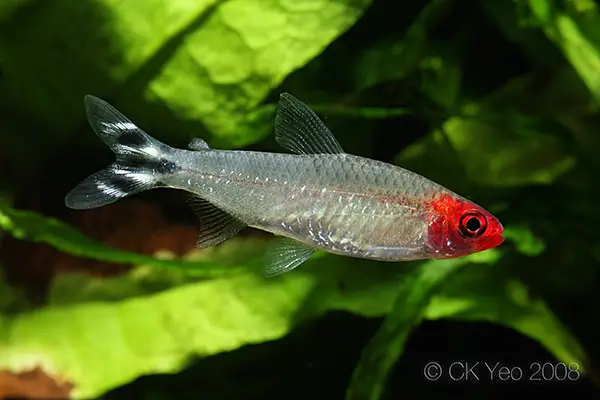
Rummynose tetra individual (SeriouslyFish.com)

These little beauties are some of the most tightly shoaling tetras in the freshwater world. Sure other tetra will shoal from time to time, but these guys do it almost nonstop. They aren't the most colorful of the tetra, but that lovely red nose sure can shine! Like most of the fish on my list, they are softwater fish. These little beauties can withstand the high temperatures that discus need and are often recommended with them. 

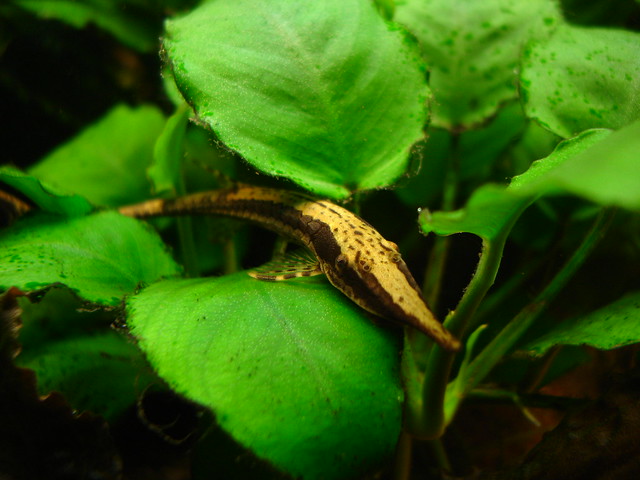
9. Twig Catfish (Farlowella spp)

Farlowella spp clinging to Anubias (sampukko @ Flickr)

This fish lives up to its name. In poorer quality video and pictures it can easily be mistaken for a twig. Its appearance is its camouflage and helps it remain undetected in the wild (and in the aquarium sometimes!). Even though I don't see him every day, I still love my farlowella. They are closely related to plecos but have an almost entirely vegetarian diet. They get quite long (7 inches [17 cm]) but lack the girth to go with it. They get along very well with small fish and shrimps. I've even seen my shrimps climb on him like he was a real twig!  

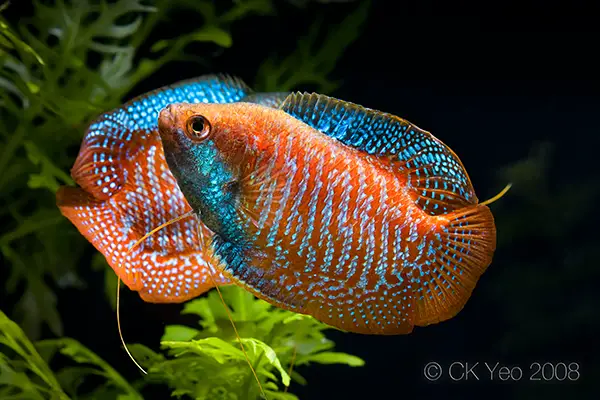
8. Gourami (Trichogaster spp)

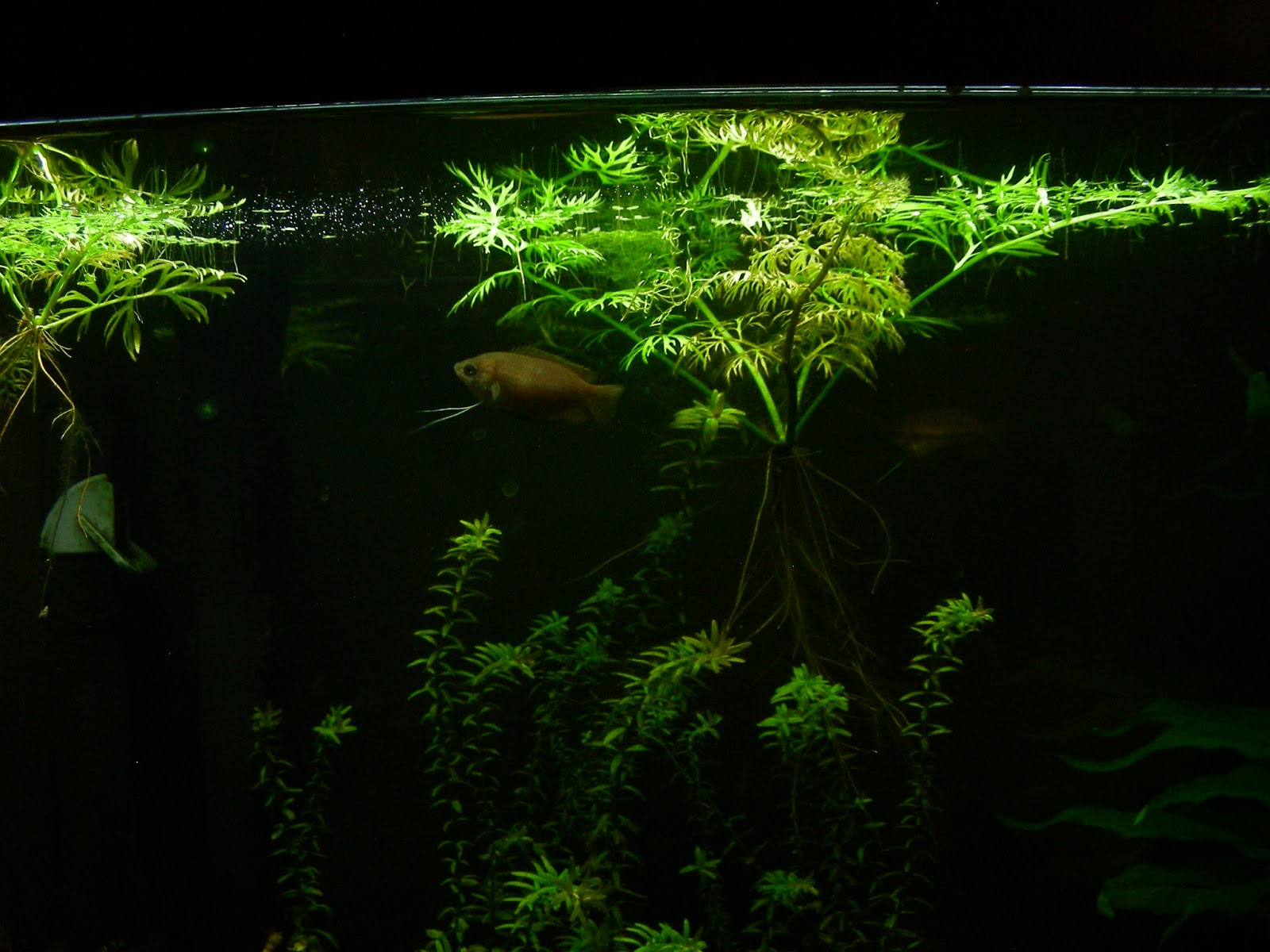
Male dwarf gourami in territorial display (SeriouslyFish.com)

An air-breather just like bettas, these little fish can make excellent centerpieces for a small tank. They do fine alone or in groups, but it's best to have multiple females per male in a group. They can be a bit territorial towards other gourami and fish that resemble gourami like bettas and cichlids, so if you are keeping multiple gourami in a tank you need to have a lot of hiding spaces for them. Gourami love areas of thick planting as well as floating plants. While I know my male gourami would do fine on his own, I just love watching his colors shine as he displays for his females.

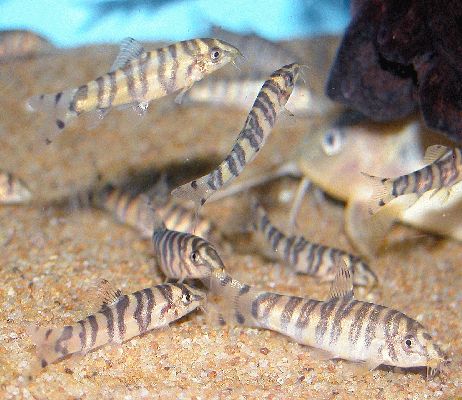
7. Botine loaches (Botia spp)

Juvenile ladder loaches Botia rostrata playing (Emma Turner @ Loaches Online)

I fell in love with these guys years ago but have not been able to get them in a tank of mine yet. I saw them playing in a petstore and fell in love. If I were a more capricious person I would have bought them then and there, but I went home and did research.  For the most part, the botine loaches need tanks 55 gallons (208 L) or larger. They get larger than you would expect (3+ inches [8 cm] depending on species) and need to be in groups of 6 or more. On top of that, they are very active. But what made me fall in love with these little buggers was the way they interact with each other. They really look like they are playing. They also like to pose in strange positions around the tank which includes laying on their sides or at otherwise odd angles just because they feel like it. For little fishes, they have lots of personality, and I can't wait to get some of these in a tank of mine one day.

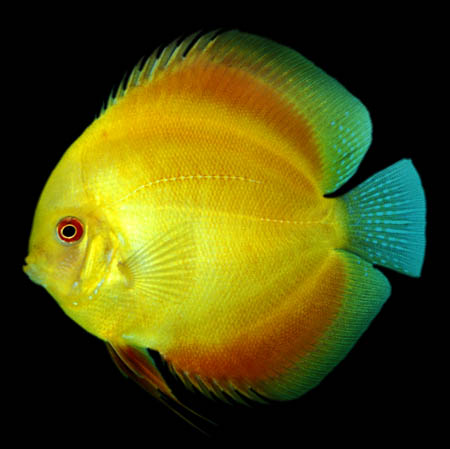
6. Discus (Symphysodon spp)

Captive bred discus Symphysodon aequifasciata (SeriouslyFish.com)

They are called the kings of the aquarium and for good reason. Growing to approximately the size of a CD and coming in rainbow of colors, discus make an impressive sight in an aquarium.Their unusual shape and myriad of colors are what first grabbed my attention, but I was hooked when I saw them swimming in an aquarium. They are so graceful! But with that grace and beauty comes a great amount of care. This coupled with their cost doesn't make them a fish for beginner or even most intermediates. It also makes them difficult to pair with other fish; it's not that they are aggressive, but it's that they need very warm, soft, and acidic water.

5. Cardinal Tetra (Paracheirodon axelrodi)

Cardinal tetra shoal (Leino88 @ Flickr)

Another one of the few fish that can withstand the high temperatures discus need, they also rival discus in coloration. Those blue streaks stand out across a room and make them the most beautiful tetra in my opinion. Up close the deep red streak that runs their full body length becomes apparent. Their relaxed and calm nature makes them a great pair with other beautiful fish like gourami and discus. Whether they are in a loosely shoaling group of 12 or in a tight shoal of 50 these tetra stand out in a tank and in my heart. If I could have any tetra in a tank, it would be these guys.

4. Fighting Fish (Betta splendens)

One of my personal bettas, Lumi the halfmoon plakat

A lot of people call these little fish with a big attitude, and I'm more than inclined to agree. Every single betta I've owned has been very personable. Those long flowing fins entice many people in, but I am more fond of the rainbow of colors they come in. Another one of my favorite things about bettas is their adaptability to smaller tanks and different water parameters. Bettas were the only fish that I could have in my 5 gal tanks while I was in college. They will also do well in hard or soft water, so you can keep them no matter what your tap water is. 

3. Kuhli loaches (Pangio spp)

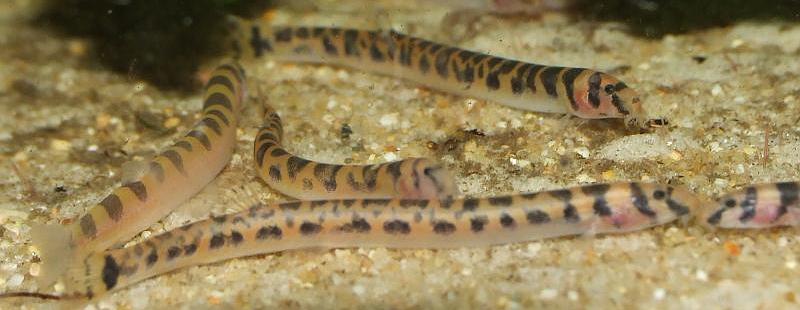
A group of Pangio shelfordii (SeriouslyFish.com)

Along with the twig catfish, these little guys are some of the strangest looking fish on my list because they don't look like fish! They look like little worms! This is especially true of the brown species. Kuhli loaches have squirmed their way into my heart. Just like the botine loaches they are full of energy and spunk. They like to drape themselves in odd positions around the tank and use those adorable whiskers to sniff out food. They love the company of other loaches and it's not uncommon to see three or four squished together in the same hidey-hole. Many people have trouble with these guy hiding a lot, but I never have. I think it's because I give them enough hiding spaces that they feel comfortable to come out all the time. 

2. Goldfish (Carassius auratus auratus)

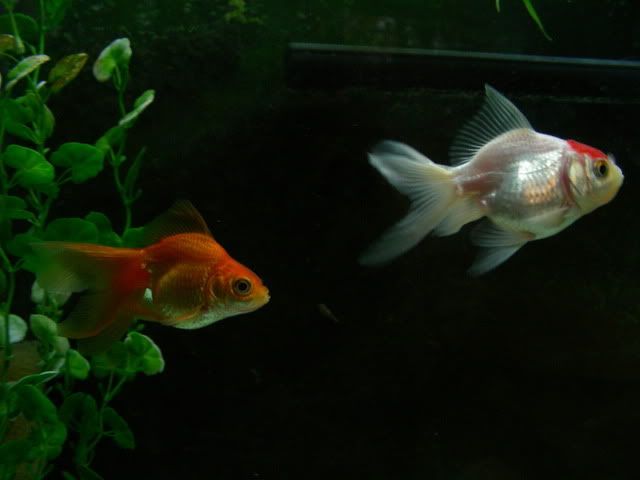
My two current fancy goldfish, Magikarp and Burbbles

Years ago when I was a young girl, these bubbly little fish stole my heart. My knowledge of their care and love of them have only increased through the years. Yes they need large tanks and lots of water changes, but it's worth it for those wiggly bodies and cute faces. I can't imagine my life without goldfish.

1. Koi (Cyprinus carpio)

Byakko, my shiro utsuri koi. Taken in 2011.

While not a true aquarium fish, they are a big part of the hobby and one of my favorite fish. But they didn't start out that way. I never really appreciated them until my little koi that I bought back in 2007 grew into 18 inch (45 cm) beauties. I spend hours in the summer just watching them swim around the pond. In the store, they do just look like large goldfish, but when they are grown there is nothing that rivals their beauty and grace. 

I am lucky enough to own a good number of these including goldfish, bettas, koi, kuhli loaches, and twig catfish. One day I will have all of these fish, but some like the botine loaches and discus are potentially a decade away. It's good to have dreams.

Wednesday, March 13, 2013

Fish in their Natural Habitats

I like my aquariums to replicate the natural homes of fish as much as possible. There is no better way to get an idea of the streams and rivers our tropical fish come from than to visit those streams. But for those of us like myself that don't have the money to do something like that, we can use videos as an alternative. Freshwater enthusiast and Venezuelan native Ivan Mikolji makes those journeys for us and shows us the wonderful natural aquariums that are home to our beautiful aquarium fish.

Friday, February 22, 2013

Divided Betta Tanks

The easiest way to keep multiple bettas!

Everyone knows that bettas need clean, warm water. Personally I don’t like to keep bettas in anything smaller than a 5 gal (19 L) because they are harder to maintain a cycle or proper temperature in. Most people have two to four bettas, and cleaning that many 5 gal (19 L) tanks can take a while. This is why the divided tank is my favorite way to keep bettas.

The Basic Setup


The idea is to separate the bettas by a solid divider. Some people use plastic mesh, and some will use solid glass or plexiglass with tiny holes drilled for water movement. The intention is to physically separate the fish so they cannot touch each other. But the two fish can still see each other.

Left without any visual barriers, they will flare uncontrollably which is stressful to them. This can lead to fin-biting or wasting away. Some fish will refuse to eat and attempt to fight the other fish until they die. This is counter-productive. So you have to obscure their view of each other by placing numerous tall decorations along both sides of the divider. Some people use fake plants; some people use décor like castles and other trinkets. I prefer to use live plants. What is important is that these decorations make it easy for one betta to get out of sight of the other. 

Newly set up divided 10 gallon tank (Pixiefarts @ Flickr)

Other decorations in the tank such as caves should be angled away from the divider to give the bettas more refuge from each other. As always a tank stuffed with decorations and live plants seems to be the best habitat for a betta. In this situation it also gives the bettas ample space to avoid looking at each other.

Most any size tank above 5 gallons (19 L) can be easily divided. The kinds of tanks you want to stay away from dividing are the tall tanks like hexigons. A tall and long tank like a 40 gal (150 L) breeder could be divided, but you would need to provide the bettas ample resting places close to the top. That is a tall tank for a fish with heavy fins. The most commonly divided tanks are 10 gal (38 L), 15 gal (56 L), 15 gal (56 L) long, 20 gal (75 L), and 20 gal (75 L) long.

Variations


There are a couple of variations on this idea, but they all have the basic concept. Some people add multiple dividers to a long tank such as a 20 gal (75 L) long. In a tank like this you could have between three and four (depending on preference) dividers. But you have to take special care to provide the betta in the middle with more than average hiding spaces because he will think he’s being attacked from both sides.

Divided 20 long (Jadesong520 @ photobucket)

Some people take this a step further and create betta barracks. The methods to do this vary greatly from placing a lot of dividers in a tank to having glass custom cut and siliconed into place, but the outcome is the same. There are usually 4+ compartments in the front for bettas and a single large compartment behind the bettas to facilitate water flow, allow for a heater, and a filter. This method is preferred by breeders because it allows you to house hundreds of bettas in a pretty compact area using multiple barracks and industrial shelving racks.

Betta barracks for 10 bettas (LittleBettaFish @ Bettafish.com)

My personal favorite dividing method is the double divider. Instead of just one divider in the tank, I use two to create three compartments, but only two compartments house fish. The middle one houses the heater and filter and a few plants. The additional divider makes it more difficult for the bettas to see each other and also offers a buffer zone in case of a jumper. Bettas are known to jump, and they do jump the divider from time to time. This HAS happened to me before while I was on vacation, but because of this middle buffer zone the bettas did not tear each other apart. They were there for hours until they were discovered. If not for this middle section, I could have come home to one or two dead bettas.
My personal divided betta tank.


View from the side. Note how opaque the divider is.

Problems


No setup is perfect and when you put two bettas in a tank together (even with a divider) you still have the potential for problems. As I was just talking about with my tank, jumping is a serious issue. Just last week a friend of mine who also has divided tanks lost one of her bettas when the other jumped the divider and beat him to death. The double divider is one way to help prevent that. The other thing you can do is make a jump guard. Because I made my dividers from craft mesh, which is bought in sets of multiple sheets, I had some left over. I cut the leftover mesh to make a jump guard. It’s just a piece of mesh that rests on top of the divider and hangs out over the edges about 3 inches (7 cm). If a betta jumps at the divider, he or she will just hit the mesh.
Jump guard made with craft mesh.

Another issue is the spread of waterborne diseases like ich, fungus, and columnaris. If one fish gets sick you have to treat the whole tank for it because the other betta (or bettas) have been exposed. Most disease can be prevented by having a good quarantine regimen.

Sometimes you will just get males or females that just can’t handle living in a divided tank. Even with lots of plants along the divider they will fin-bite or pace all day, trying to get away. Generally the bettas that are more relaxed tend to do better in divided tanks. Having two very aggressive bettas in a divided tank can be a problem. This is a specialized setup; it isn’t for every betta.

As I have said before this is my favorite way to keep bettas. You get double the fish for the same amount of maintenance. My betta tank gets one 30% water change weekly and takes the least time of all of my tanks. I highly recommend this type of setup to anyone. I leave you with a video of my divided betta tank. The two males do not notice each other at all.


Friday, February 15, 2013

My Tanks: 15 Feb Update

Wow. It's been a long time since an update, and I have a lot to tell. There will be a lot of pictures.

Community Tank

The biggest changes have been in the 29 gal community. It is almost completely stocked. In the beginning of January I ordered my Farlowella acus from Invertibrates by Msjinkzd. Since I knew it might still be a while before there was some color and movement in the tank I also ordered a handful of red cherry shrimp (Neocaridina heteropoda var. red) to add some movement and color. Everyone arrived safe and in great health; I highly recommend buying from this seller! I know I will be a repeat customer. Just take a look at what she sent me! 

Farlowella acus on his first week in the tank. He's cleaned up that algae now.

From the side. The seller did an excellent job of making sure he was eating
before selling him. Comes off his wood when the algae wafers go down.

One of my female RCS just a few days after introduction. She is now berried.

The crypts that I added back in December have really taken off. Both plants have very little melting, and I see lots of new leaves. The tiger lily did not make it. It showed good growth for a few weeks and then the leaves just withered away and never came back. I noticed a problem with the flow behind the smaller piece of driftwood, and had to move the wood and the dwarf sag and pygmy chain sword that was behind it. The sword never recovered and my other sword that was in the tank died off, too. The dwarf sag is slowly recovering, but I don't think it will ever do well there. So I'm looking to put some more crypts on the right side later this year.

In the beginning of February I ordered kuhli loaches (Pangio oblonga) and a trio of honey gourami (Trichogaster chuna) from The Wet Spot in Oregon. Everyone came through quarantine without a hitch so they were put in the main tank a week after they arrived. In fact, they actually spawned twice in the QT to give you an indication of the health of the fish when they arrived. The Wet Spot is another seller I highly recommend.

Full tank shot. You can see the male just to the left of the wood.

One of the females defending her position.

My male gourami trying to romance one of the females.

I believe this is one of the new loaches. It's rare that I get
a picture of them at all, so a butt shot will have to do!

Other tanks

Not too much has changed in my betta and goldfish tanks. I removed the fake floating plants in the goldfish tank since the live plants have grown large enough to fight the current from the filters. It took the goldfish a little bit to get used to, but they're adjusted now.

In the betta tanks I've replaced the home-made sponge filters with Hydro II sponge filters. I noticed some algae issues a few months back and decided I needed a bit more flow. The Hydro II's have give that to me but still keep the flow low enough for the bettas. It's a win-win!

And I did a bit of decorating both tanks for Valentine's Day!

Goldfish tank! Pardon the algae on the back wall.

Hearts on the betta tank! They flared at them for a few minutes.

My last bit of news is a plan to set up a new tank! The plants in my second betta tank just never did well. So I'm breaking down that setup, finding new homes for the bettas and setting up a dedicated red cherry shrimp tank! Those little shrimps were just supposed to be a placeholder until I could get some movement in the tank, but I've fallen in love with them. I have seen the female RCS holding eggs in the community, but I've never seen the babies. I'm pretty sure the fish are eating them. So instead of fighting nature I'm going to dedicate a tank to my shrimps!