Saturday, June 30, 2012

Natural Swimming Pools

It’s summer, and the heat is on in full force. Heading to the pool is one of the best ways to cool off. Ever dreamed of swimming in the pool with your fishes? Don’t try plopping a goldfish into your typical chlorinated pool. There is a new trend on the market: natural swimming pools. Instead of using chlorine to clean (or should I say disinfect) they use natural ecological processes to keep the water clean. These types of pools rely on lots of fast-growing plants, large surface area for good bacteria, and proper water movement. (Do these principles sound familiar to you?) They are basically a very lightly stocked pond with a large open area for you and your friends to swim.

The regen area is typically filled with plants like lilies and cattails. (fncponds.com)

While you won’t be able to have a whole school of goldfish or tons of massive koi in the water, between 5 and 10 fish are acceptable depending on the size of the pool. These fish should not be fed as this will add more waste to the system. Goldfish are very adept at finding their own food in a system like this. If you add fish make sure you only add one gender as they are notorious for reproducing. The aim of these systems is to create a balance. With goldfish constantly reproducing, you’ll have a hard time doing that.

Every natural swimming pool is different. They come in many designs from a traditional pool with the natural regeneration area to something that could easily be mistaken for a koi pond if it wasn’t for the diving board. I know that if I ever have the funds, I’ll be looking to install one of these beauties in my backyard.

Typical swimming pool with a regen area on the left. (Enricoslasheric @ Wikipedia)


Natural pools are functional in the summer but are still an attractive landscape feature in the off season.

Very natural-looking pool with regen area in upper right (ecolagoons.com)

I can post pictures here all day long. I love looking at these things because every single one is different. They also give me ideas for how I would design a natural pond.

Thursday, June 21, 2012

Betta Fish Awareness Day 2012

Today is Betta Fish Awareness Day 2012! Time to get out and spread the word about proper betta care!

Click to enlarge (American Betta Fish Association)

This lovely brochure created by the betta enthusiasts and breeders at the American Betta Fish Association also comes in a black and white form that can be printed out. Post this brochure around town at local pet stores and vet clinics to spread the word about proper betta care. Always remember to be kind and courteous when you do. As my grandfather likes to say, you get more with sugar than you do with salt.

Another way you can participate is to sign and let others know about this petition to convince Petsmart to stop selling tanks that hold less than a gallon of water. Stores in the UK don't sell these tiny tanks. Let's help US chain stores jump on the bandwagon. Just to be clear, the petitioners have no problem with breeders keeping fish in these small tanks because breeders understand the needs of these fish. But when a large store like Petsmart markets these small tanks to new betta keepers and doesn't properly explain how to clean and safely heat tanks like this, it leads to unnecessary mistreatment of the fish.

Let's face it. There is a problem with the way most store sell bettas (and goldfish). While regulations against small tanks might do a bit, a betta in a dirty, unheated 2.5 gallon bowl isn't better off than a betta in a clean, heated 1 gallon bowl. The only way to save these beautiful fish from that horrible fate is to educate the public and pet store workers. And that is what today is all about. 

(copperarabian @ Deviantart)

Thursday, June 14, 2012

My Tanks: 14 June Update

So today I went to the pet store to get some plants for my goldfish tank and made the mistake of looking at the goldfish. I found an adorable little orange ryukin. He looked in great health, so I took him home. Right now he is in a 20 gal quarantine tub that is running a home-made sponge filter with media from the main tank; using this filter I don't have to worry about mini-cycles in the quarantine tank. While my new goldfish is in quarantine, he will be undergoing a prazi treatment for external parasites which most goldfish from pet stores carry. I will also be watching for signs of other illnesses such as ich and fungal infections. Now for the pictures!

He's sooo tiny!

This log is his favorite hiding spot. I only coaxed him out with food.

This is just too cute, and even tho he's hidden, I had to add it.


For plants, I bought an amazon sword (Echinodorus amazonicus). Because my substrate is so loose, I rooted the plants in terracotta pots with smaller-sized gravel that way the roots can take root. It will also make them easier to move if I decide to reposition them. I also added hornwort (Ceratophyllum demersum) rooted in a smaller pot. Hornwort is great for goldfish tanks because it is a fast-grower that sucks up ammonia very fast and it likes the hard water in which goldfish thrive. To boost the growth of these plants I've added Seachem's Flourish Comprehensive liquid fertilizer. The plants don't look like much now, but I'm hoping they will take off in a few weeks. Hopefully I'll have more and better pictures then.

Amazon sword on left; hornwort on right

Monday, June 11, 2012

Sea Monsters on film!!

Lol not really!

But the ocean really is full of amazing and sometimes terrifying creatures. No doubt that a few sightings of some of these beasties contributed to many ancient tales of sea monsters. Here I'll count down the top 15 weirdest bony fish in the ocean. I didn't count in sharks and rays because that's a whole different article. So here we go!

# 15 Mackerel Icefish (Champsocephalus gunnari)

Mackerel Icefish (fishindex.blogspot.com)

This unique little guy spends his life deep in the Southern Ocean that surrounds Antarctica where the water often approaches freezing. Their blood lacks hemoglobin and red blood cells earning them their clear appearance as seen in the pictures above. They are able to survive without these oxygen-carrying proteins because the oxygen content of the water is so high. They also have an antifreeze protein in their blood to prevent the buildup of ice crystals.

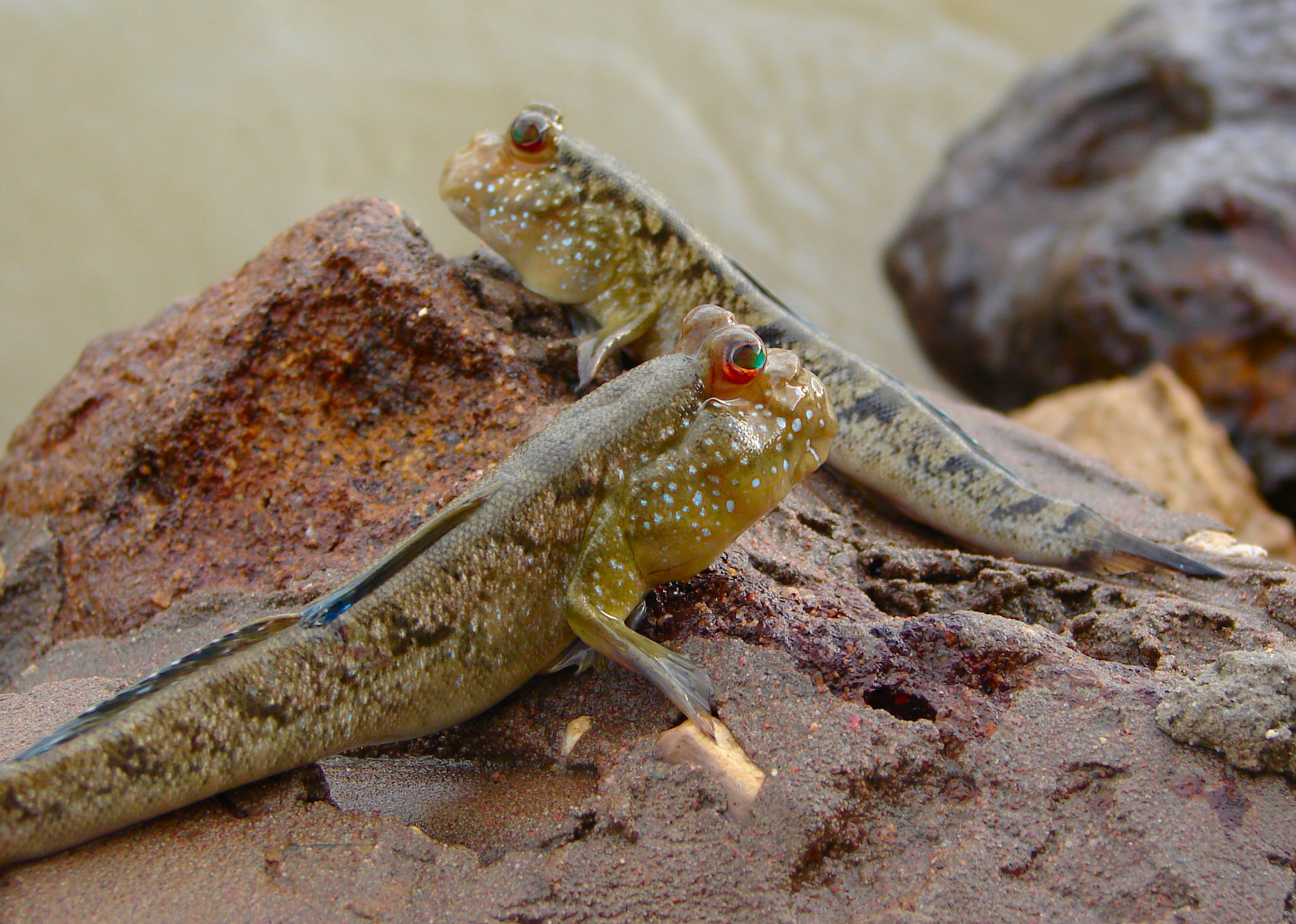
# 14 Mudskippers (Periophthalmus spp)

Atlantic mudskipper, Periophthalmus barbarus (Bjørn Tørrissen)

These fish are amphibians. They move more efficiently on land than they do in water. They still need water to survive, but using their powerful pectoral muscles they can "skip" around on land. And they actually prefer land to water. They can breathe through their skin, but it needs to be moist to do so. They even lay their eggs on land. These fish can be kept in very specialized home aquariums;  the water should be brackish and these fish need an area of land to hop about.


# 13 Ocean Sunfish (Mola mola)

Sunfish at Monterey Bay Aquarium (Fred Hsu)

This fish is widely considered the largest bony fish. They average about 5.9 ft (1.8 m) in length and 2,200 lb (1,000 kg) in weight, although individuals up to 10.8 ft (3.3 m) in length 14 ft (4.2 m) across the fins and weighing up to 5,100 lb (2,300 kg) have been observed. It can grow so large because the fish displays delayed calcification of the bones. Their caudal fin is distorted into a psuedo-tail called a clavis which gives them their distinctive shape. They swim using their dorsal and anal fins. These fish got their name from the tendency to lie on their side near the surface and allow birds and cleaner wrasse to remove parasites from their skin. While they may be huge, they eat relatively small jellyfish and are very peaceful fish.  

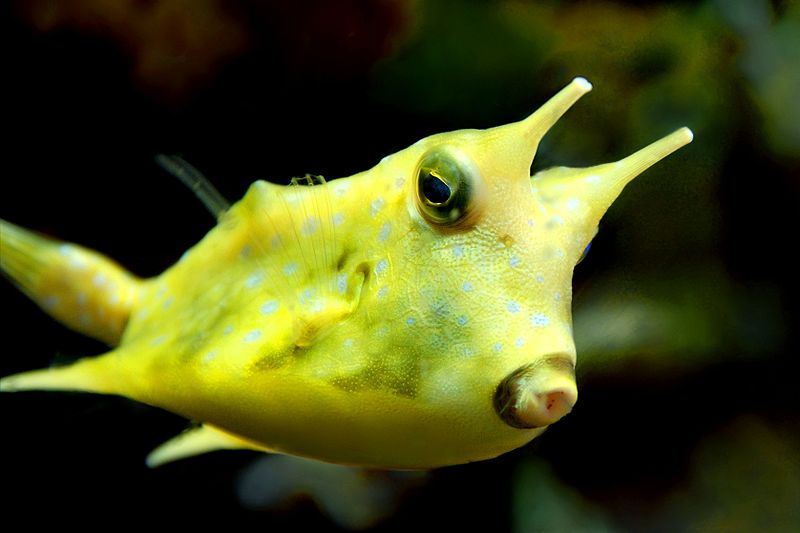
# 12 Longhorn cowfish (Lactoria cornuta)

Cowfish (Dein Freund der Baum)

Don't get out your lasso just yet. This guy is only about 1 foot long. They live in tropical reefs in Indo-Pacific. They are in the same order as puffer fish and the Ocean Sunfish. They are known to produce a toxin similar to pufferfish when stressed. This is because they are closely related to puffers.With the right size setup, this is one of two fish in this article that can be kept in home aquariums.

# 11 Giant Oarfish (Regalecus glesne)

Giant Oarfish that washed ashore in Oregon in 1996 (public domain)

Sometimes known as the "King of Herrings" although it is not related to herrings. It has the title of being the longest bony fish in the world with a max reported length of 65ft (17 m). This other-worldly creature is one that surely spawned a lot of sea monster legends. Just look at the pictures and you can see why. Live specimens are rarely seen as they spend a lot of their time at deep depths, which adds to the mystery of the creature.

# 10 Leafy Seadragon (Phycodurus eques)

Leafy sea dragon (public domain)

While it has dragon in the name, this seahorse relative is nothing like the mythical beasts. It floats along using its fleshy protrusions to camouflage itself. The leafy seadragon can also change its color to better camouflage itself. It is one of the most spectacular examples of camouflage: neither prey nor predators recognize it as a fish. Its long snout is used to suck up small fish and shrimp.  It's found on reefs with kelp in the south of Australia. Like most seahorses, the father broods the eggs in his pouch. But unlike most seahorses the tail of the leafy seadragon is not prehensile. 


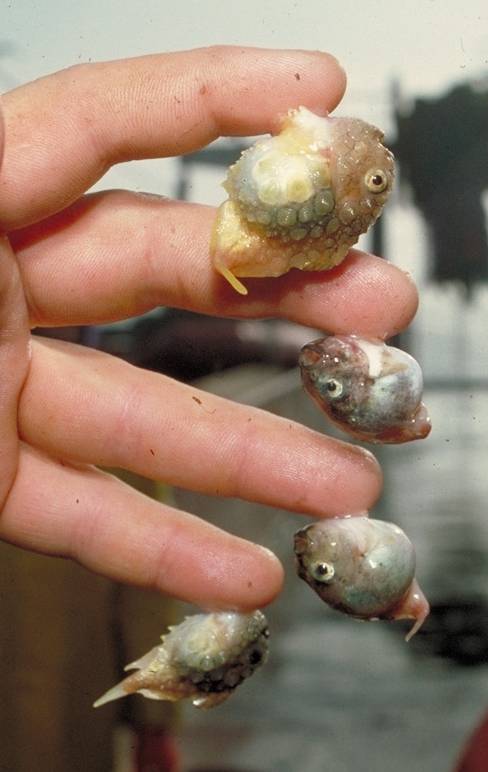
# 9 Pacific Spiny Lumpsucker (Eumicrotremus orbis)

Spiny and toad lumpsucker (public domain)

Lumpsucker is a very appropriate name for this little guy as it looks more like a lump than a fish. Its pelvic fins are modified into an adhesive disk that allows these strange fish to maintain a firm grip on rocks because they don't move around a great deal. They catch food as it passes by.

# 8 Spotted Handfish (Brachionichthys hirsutus)

Spotted handfish showing off his "hand" (credit in photo)

Ever seen a fish with hands? This strange little guy doesn't have hands, but his modified pectoral fins look really close. This guy uses his pectorals to "walk" across the ocean floor. They only live in Australia and are in big trouble due to an introduced starfish that consumes its eggs. They are only being recorded in the estuary of Derwent River, Tasmania, and nearby areas. The IUCN lists them as critically endangered.

# 7 Barreleyes (Macropinna microstoma)

Image of Barreleyes captured on deepsea dive (MBARI)

Otherwise known as the fish with a glass head, this strange fish hangs motionless in the waters between 2,000 ft (600 m) to 2,600 ft (800 m), in the depths where almost no light reaches. The top of its head is filled with a clear liquid. It turns its barrel-shaped eyes skyward and watches for food to fall. When it sees food, the eyes swivel back into place and it swims toward its food. Creepy, no? 


# 6 Fangtooth (Anoplogaster cornuta)

Fangtooth (PBS online)

This tiny terror of the deep has the largest teeth relative to body size of all the fishes. In adults, the largest two fangs of the lower jaw are so long that the fangtooths have a pair of opposing sockets on either side of the brain to accommodate the teeth when the mouth is closed. Juvenile fangtooth look so different from adults that they were once classified as a separate species.

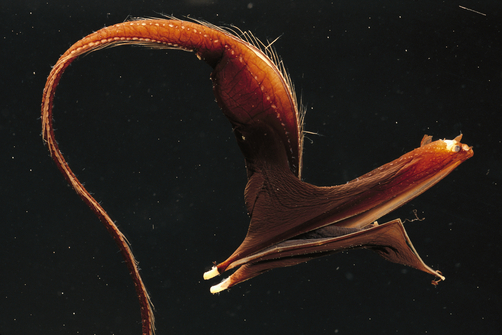
# 5 Gulper eel (Eurypharynx pelecanoides)

Gulper eel (National Geographic)

Another oddity of the deep. This fish is almost all mouth and can swallow fish much larger than itself with its loosely hinged jaw. At the end of its whip-like tail are organs that glow presumably to attract prey. This fish only grows to 3 ft (1 m) so you only have to worry about it gulping up your dogs and children ;)

# 4 Blobfish (Psychrolutes marcidus)

Blobfish on the surface (fishindex.blogspot.com)

Dubbed the "most miserable-looking fish" the blobfish is the result of the high-pressure environment in which it resides. With pressures being several times that what occurs at normal sea levels buoyancy via a swim bladder is inefficient. The blobfish remedies this by being a gelatinous mass with a density slightly less than that of water. It has almost no muscle mass, but that doesn't both it because it just gulps any edible matter that floats in front of its face. Unfortunately this sad little blob could one day become extinct. Because of its inability to swim rapidly it often gets caught in deepsea trawling nets. It is only known to exist in one area off the coast of Australia where trawlers fish for crab and lobster. Sadfish is sad.

# 3 Fanfin Seadevil (Caulophryne jordani)

Fanfin seadevil female (MBARI)

This is the stuff nightmares are made of. This member of the anglerfish family rightfully earns the name seadevil. But the fact that it only grows to 4.3 in (11 cm) takes away a lot of the fright factor. The Fanfin Seadevil is distinguished from other anglerfish in that it does not rely on biolumincense to attract prey. Male anglerfish are also a neat thing (ladies, you'll like this one). Male anglerfish don't grow nearly as large as female anglerfish. Their sole purpose in life is to seek out the females. Once they do they latch onto the female and become parasitic. Their bodies whittle away to nothing but testes with their only purpose being to provide sperm for the female's eggs. This is because mates are so hard to find in the deep sea, that once you have one its best to stick with that one until it’s all over.

# 2 Red-lipped Batfish (Ogcocephalus darwini)

Red-lipped batfish (National Geographic)

This guy gives the blobfish a run for its money as the grumpiest fish in the ocean. Found only around the Galapagos Islands this strange creature doesn't swim across the ocean floor; like the handfish, it walks across it using its pectoral fins. In adulthood the dorsal fin modifies to become the fleshy protrusion in front of its face. It's used to attract prey and give it the appearance of a nose. Personally, I think this is the ugliest fish in the ocean. The handfish, batfish, and seadevil are all types of anglerfish (Order: Lophiiformes) and have many more creepy cousins. The first minute of the video below shows this strange fish in action.


# 1 Psychedelic frogfish (Histiophryne psychedelica)

Not an altered photo (credit in image)

No you are not tripping. This is an actual fish. This recently described fish earns the title of weirdest fish in the ocean not just for its groovy pattern but its mode of locomotion. While it often walks along the bottom using its pectoral fins, it can also shoot a jet of water through its gills and jettison itself. During this motion it takes on a ball shape and literally bounces along the ocean floor. You can see this in the video below. The odd shape of its face also gives it depth perception believed to be similar to that of humans. It's associated with coral reefs and has only been found on Ambon Island in Indonesia thus far. Don't stare at its eyes too long.


So that concludes our tour of weird fishes of the sea! If you think I left out something else strange post it, too! Fishbase.org was my main source as well as numerous other sites such as National Geographic, Monterey Bay Aquarium, and Arkive.org.

Tuesday, May 29, 2012

Best and Worst Beginner Fish

I see a lot of people ask “what fish should I start with?” I also see a lot of people starting with fish that they were lead to thinking were easy.  Most people want a tank full of beautifully colored fish. I understand this, but often the most beautiful fish are also much more delicate. However, there are some very pretty and hardy fish with which you can start your hobby. They may not look like much in the store tanks, but once you get them home and into a good setup, they will show their true colors for you.

Through personal experience and discussion with other aquarists, I have gathered a list of fish that are good for the budding fishkeeper. These fish were chosen for their hardiness (ability to survive a cycle and live in less than ideal conditions), adaptability (can live in a wide range of parameters), small size (ideal for the first aquarium), and peacefulness. I have also compiled a list of fish that beginners should avoid for various reasons such as size, aggressiveness, and sensitivity.

Before I go into the fish, let me take a minute to explain what a good first aquarium size is. While bigger is always better, the beginner might not want to start with a massive tank of 55 gallons (209 L) or larger. This is a big tank (and a big expense), and big tanks mean big water changes which a new aquarist might not want. Conversely a 10 gallon (40 L) isn’t a great beginner tank because it is so small, and small tanks can have fast and dangerous water parameter swings. Also you can only fit one or two species of fish in a tank of that size. I’ve come to believe that tanks from between 20 gallons (75 L) and 40 gallons (151 L) make great beginner tanks because they are large enough to be mostly stable but not too large as to be a pain to perform water changes and they enable the first time fishkeeper to keep more than two species. 

The Bad Choices


Many fish that the pet stores tout as easy and great for beginners are far from that for many reasons. Some grow too large, some are hard to keep alive, and some are aggressive. Since there is a multitude of fish that would make poor first choices, I’m going to group them into categories and give you examples of fish that fall into these categories.

The first category of poor beginner fish are chosen because they get so large. They are sold as cute, inch-long babies, but they will soon be busting the walls of a normal beginner aquarium. These fish include goldfish (Carassius auratus auratus), common pleco (Hypostomus plecostomus), oscar (Astronotus ocellatus), and kissing gourami (Helostoma temminkii). Many people are surprised to see goldfish on this list because all you see in the stores are cute little goldfish. Trust me: these little golden wonders will soon be around a foot long and all the while they grow, pooping like a fiend. They are a hardy fish, but they just get too large for most beginners to handle.

You also don’t want to start off with a fish that is too sensitive. Oto catfish (Otocinclus macrospilus), angel fish (Pterophyllum spp), cardinal tetra (Paracheirodon axelrodi), and many more fall into this category. They should never be introduced to a cycling tank (tank where colonies of beneficial bacteria are not established and harmful levels of ammonia and nitrite are present) because they can’t handle the stress of a cycle. Oto catfish specifically need a setup that has had time to grow algae because they primarily eat algae. They come to stores starving because they are captured from the wild where they only eat algae. By the time they get to the store they haven’t seen any in weeks; they will starve to death in a brand new setup because it lacks algae.

Another mistake that beginners often make is buying fish that are too aggressive to keep with much else; they end up with a moderately large tank and nothing in it but a single school of fish. Or they buy a “freshwater shark” because the name sounds cool, and then end up with a tank full of fish cowering in the corner trying to stay away from the shark’s bullying nature. If you just want to keep a school of these fish or a freshwater shark, then go right ahead, but you won’t be able to add anything else to the tank. Fish that fall into this category are tiger barbs (Puntius anchisporus), black skirt tetra/black widow tetra (Gymnocorymbus ternetzi), and the freshwater sharks like rainbow shark (Epalzeorhynchos frenatus), bala shark (Balantiocheilos melanopterus), and red-tailed shark (Epalzeorhynchos bicolor).

Guppies (Poecilia reticulata) are a great beginner fish, right? You’d be surprised to learn that they are not. They were many years ago, but commercial scale breeding and continuous inbreeding has made what was once an extremely hardy fish into a weak, disease-ridden fish terrible for beginners. If you can find guppies from a hobby breeder, then you have the chance to get some good fish, but pet store guppies are so weak, they can hardly be considered a good fish anymore. Sadly, neon tetra (Paracheirodon innesi) and dwarf gourami (Trichogaster lalius) have also gone down this same route. Commercial-scale breeding programs are now producing weak, inbreed, and disease ridden fish. In fact, both fish now have a disease named after them because these fish so commonly carry them: dwarf gourami iridovirus and neon tetra disease. These diseases have no cure and can spread to other species.

I know you want to start off with strange and unusual fish to wow your friends, but these fish are usually delicate, difficult to keep alive, and have specific needs. This brings me to my final category of fish that are bad for beginners: the oddballs. These are fish like the black ghost knifefish (Apteronotus albifrons), German blue ram (Mikrogeophagus ramirezi), and African butterfly fish (Pantodon buchholzi). A good rule of thumb is if it looks strange, it’s going to be hard to keep alive. 

The Good Choices 


Don’t despair. While those are fish you shouldn’t start with, you have plenty of attractive and interesting options that can be your first fish. Instead of grouping them like the bad beginner fish, I have listed them out with pictures and general care information. All of these fish are not picky eaters and will readily accept any flake or pellet food.

Blue Tetra (Catxx @ the Aquarium Wiki)

Blue Tetra, Cochu (Boehlkea fredcochui)
Tank size: 20 gallons, 24 inches long (75 L, 61 cm)
Temp: 72 - 79F (22 - 26C)
pH: 6.0 - 8.0
Water hardness: up to 15 dGH
Notes: Like most tetra species this is a schooling species and needs to be maintained in groups of 6 or more. When buying schooling fish like this it is best to buy about 9 so in case you have a death, these fish won’t start bullying other fish. Don’t keep them with fish with long fins like betta fish. This fish will be most colorful in an aquarium with lots of cover such as decorations and plants (live or fake).

Group of Flame Tetra (Catxx @ the Aquarium wiki)

Flame tetra, Fire tetra, Von Rio tetra (Hyphessobrycon flammeus)
Tank size: 20 gallons, 24 inches long (75 L, 61 cm)
Temp: 72 - 82F (22 - 28C)
pH: up to 7.8
Hardness: up to 25 dGH
Notes: This is another gorgeous and hardy tetra species. They should be kept in a minimum of 6, but keeping them in larger numbers will make them more attractive and reduce the nipping tendencies common with tetra. Don’t keep them with slow-moving fish. It will show its best colors in an aquarium with lots of decorations such as fake or live plants.

X-ray tetra (Debivort @ Wikipedia)
 
Pristella tetra, X-ray tetra, X-ray fish, Goldfinch tetra (Pristella maxillaris)
Tank size: 10 gal, 20 inches long (40 L, 50 cm)
Temp: 74 - 82F (24 - 28C)
pH: up to 8.0
Hardness: up to 30 dGH
Notes: In my opinion, this is one of the best beginner fish because it is so easy to keep. It will survive in all but the most hard of municipal water supplies. Like all tetra, it should be kept in groups of 6 or more at a minimum.

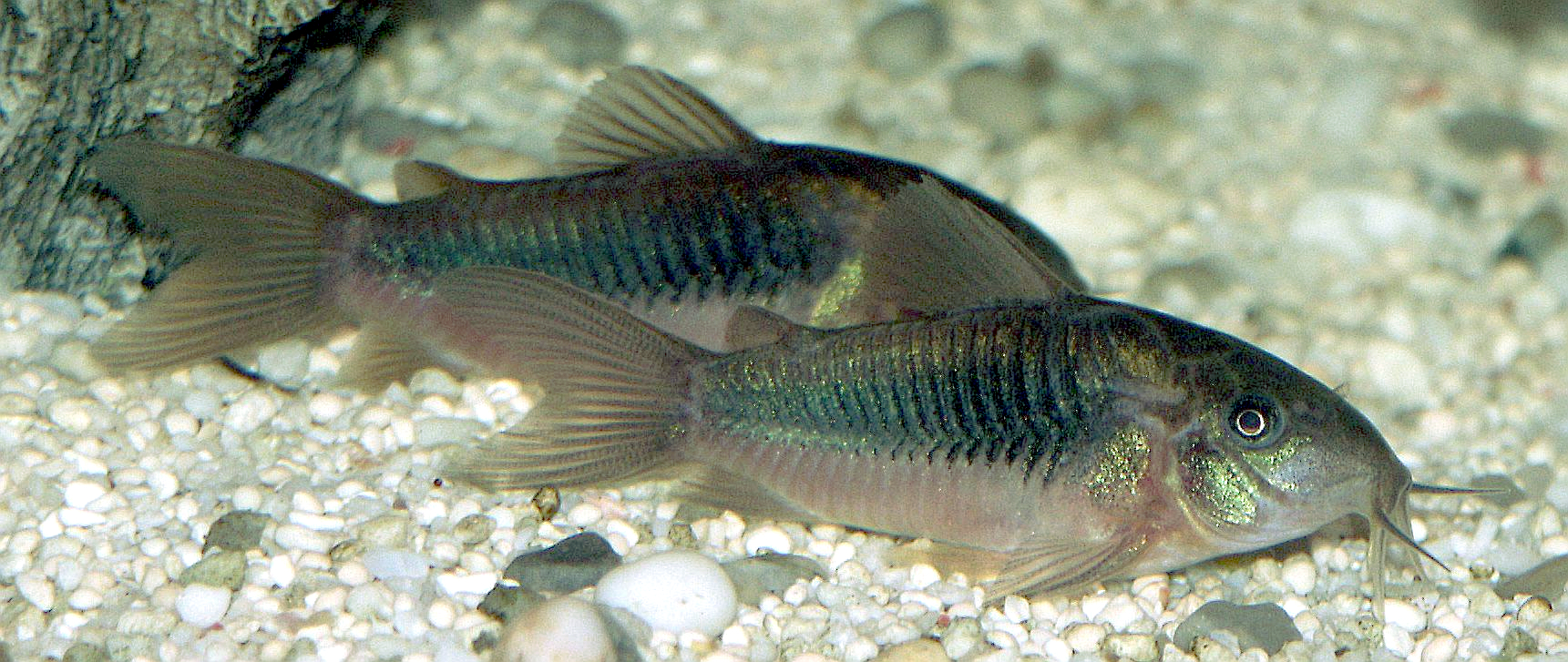
Bronze cory cats (public domain)

Bronze Cory Cat, Albino cory (Corydoras aeneus)
Tank size: 20 gal, 24 inches long (75 L, 61 cm)
Temp: 70 - 80F (21 - 27C)
pH: 6.0 - 8.0
Hardness: up to 20 dGH
Notes: Also found in an albino form, the bottom-swimming bronze cory is a great addition to a new fishkeeper’s aquarium. They will do best with a sand bottom but can manage with smooth gravel. It will be most active when kept in groups larger than 5. Three is the minimum that should be kept together as these fish are very social.

Two harlequin rasbora (Stee @ flickr)

Harlequin Rasbora, Red rasbora (Trigonostigma heteromorpha)
Tank size: 20 gal, 24 inches long (75 L, 61 cm)
Temp: 70 - 82F (21 - 28C)
pH: below 7.5
Hardness: up to 15 dGH
Notes: A common fish in pet stores, it is a great choice for a beginner. This is another social fish that needs to be maintained in groups of 6 or more, but it will fare best with groups of 10 or more.

Two Bandit cories (Stuart Halliday)

Bandit cory, Masked cory (Corydoras metae)
Tank size: 10 gallons, 20 inches long (40 L, 50 cm)
Temp: 70 - 77F (22 - 25C)
pH: up to 7.5
Hardness: up to 15 dGH
Notes: As they are more shy than bronze cories, they should be kept in groups of 6 or more. They will be much more active in larger groups. When kept singly or with 1 or 2 other bandit cories, they will not be seen much and may be too shy to feed. They like a sand bottom best as they enjoy rooting around in the sand for morsels of food.

Regular zebra fish (public domain)

Glofish, genetically modified zebra danio (www.glofish.com)

Zebra danio/glofish (Danio rerio)
Tank size: 20 gallons, 24 inches long (75 L, 61 cm)
Temp:  65 - 77F (18 - 25C)
pH: 6.0 - 8.0
Hardness: up to 20 dGH
Notes: Also sold as the brilliantly colored glofish, these peaceful little schoolers make a much better candidate for a smaller unheated aquarium than goldfish do. The zebra danio that are sold as glofish aren’t dyed. They are actually genetically engineered to be that way by having jellyfish and coral genes implanted in their own. They will pass this down to their children, too. Like all schooling fish, these active little swimmers need at least 6 of their own kind to feel safe (you can mix glofish and the regular zebra danio). As a precautionary, I feel like I need to mention that due to massive inbreeding, this fish are becoming less and less hardy; one day they might not be good beginner fish.

Glowlight tetra (gonzalovalenzuela @ flickr)

Glowlight tetra (Hemigrammus erythrozonus)
Tank size: 20 gal, 24 inches long (75 L, 61 cm)
Temp: 74 - 82F (24 - 28C)
pH: up to 7.5
Hardness: up to 15 dGH
Notes: Like all the other tetra, this little beauty is a schooling fish and should be kept in groups of at least 6, but if you have the room and biological capacity add as many as you can. They are most colorful in large groups. An albino form is also seen and is just as hardy as the normal form. The albinos will school with the regular glowlights.

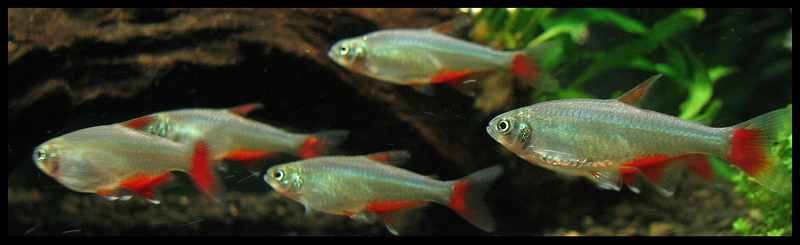
School of bloodfin tetra (public domain)

Bloodfin tetra (Aphyocharax anisitsi)
Tank size: 20 gal, 24 inches long (75 L, 61 cm)
Temp: 64 - 82F (18 - 28C)
pH: 6.0 to 8.0
Hardness: up to 30 dGH
Notes: This fish gets my vote as the best beginner species. It can survive a wide range of water parameters and is commonly found at petstores. Kept in groups of 6 or more, its brilliant red fins will sparkle in the water.

Male cherry barb (Sannse @ wikipedia)

Cherry Barb (Puntius titteya)
Tank size: 20 gallons, 24 inches long (75 L, 61 cm)
Temp: 74 - 81F (23 - 27C)
pH: 6.0 to 8.0
Hardness: up to 20 dGH
Notes: Barbs, like tetra, need groups of 6 or more to feel safe. They will be more colorful and be out in the open more if they have large groups. Unlike the tetra, the males are more colorful than females. The males have a much more red color while the females take on a yellow-brown hue.

Male swordtail on left; female on right (MacAnthony @ flickr)

Swordtail (Xiphophorus hellerii)
Tank size: 29 gallons, 30 inches long (109 L, 76 cm)
Temp: 68 - 82F (20 - 28C)
pH: 7 to 8
Hardness: 9 - 30 dGH
Notes: As this fish is a livebearer it is the best choice for a new aquarist with hard water. The catch is, if you put males and females in a tank together, you will get more swordtails. If you don’t want baby fish, get only males. If you want baby fish, make sure there are 3 females to every male. Males are also the more attractive of the sexes, so an all-male tank would be ideal for a beginner. Pretty and you don’t have to worry about babies.

These next two fish are good beginner choices, but they come with a catch which I will highlight in italics.

Male betta (copperarabian @ deviantart)

Betta fish/Siamese Fighting Fish (Betta splendens)
Tank size: 5 gallons (18 L)
Temp: 76F - 84F
pH: 6.0 - 8.0
Hardness: up to 20dGH
Notes: Betta fish are a great first fish if they are the only fish in the tank. They are very hardy, easy to care for, and will generally take any beginner mistakes in a stride. Their small tank requirement also makes them great as a dorm pet. Due to their aggressive nature, keeping betta with other fish makes the difficulty go up and can be a bit much for a new fishkeeper. Keep him in his own 5 gal tank and you will have an easy setup with a very interactive fish.

Male honey gourami (Kooshking @ flickr)

Honey gourami (Trichogaster chuna)
Tank size: 20 gal, 24 inches long (75 L, 61 cm)
Temp: 72 - 82F (22 - 27C)
pH: 6 - 7.5
Hardness: up to 20 dGH
Notes: This little jewel is the smallest and most peaceful of the gourami. It will make a great centerpiece fish in a small tank provided it is the only gourami in the tank. This also includes bettas as they are gourami, too. Male gourami are territorial and will fight when placed in the same tank. The males are the most colorful, so just one would be the perfect addition to a beginner’s tank.

Don’t feel limited by what the pet stores tell you are good beginner fish (because they are often wrong). The beginner has many attractive options for their first fish tank. As I discuss in my How to Stock a Fish Tank article, combining a species of cory cats and a school of tetra in a 20 gal tank could make a very nice display for the first-time aquarist. While not all of these fish may be available at your local pet store, I’m sure you will be able to find some of them to help you get started in your fishkeeping hobby.

Works Referenced


Monks, Neale. 2008. “Fish Viral Disease.” www.fishchannel.com. Retrieved 28 May 2012.

Monks, Neale. 2011. “Neon Tetra Disease.” www.fishchannel.com. Retrieved 28 May 2012.

Ramsey, Graham. 3 March 2010. “Top Ten – worst beginner fish.” fcas.wordpress.com. Retrieved 27 May 2012.